❝
learned a lot. Happy to be learning from an expert. My experience with IIAG group is excellent.
Payal TewatiaFaridabad
★★★★★
 0.00
0.00
 0
0

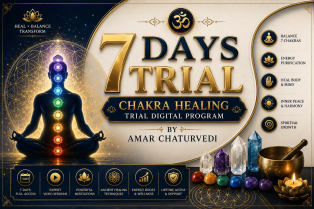
The Chakra Healing Siddhi Digital Program is an online learning program focused on understanding chakras, energy balance, chakra-related practices and spiritual development. It provides structured learning material for individuals interested in learning Chakra Healing from home through a digital course format.
Amar Chaturvedi expert guidance ensures a comprehensive and in-depth understanding of how to apply these ancient sciences for improved quality of life. This recording course is designed for aspiring and practicing Enger Healing Consultants and is available in both online and offline formats, typically spanning 6 months.



Chakra Healing is traditionally discussed through seven main centres: Root, Sacral, Solar Plexus, Heart, Throat, Third Eye, and Crown. Each one has its own place in the system, along with particular associations and practices. The Root Chakra is considered differently from the Heart Chakra, just as the Third Eye and Crown have their own areas of discussion.
Meditation is one familiar practice, but chakra work can also include breathing, visualisation, affirmations, concentration, and attention to the body. The practice being used may depend on the chakra under consideration. Questions about energy flow and balancing can therefore be discussed with the particular centre in mind.
The Chakra Healing Siddhi Digital Program gives more space to these details. The Siddhi level is concerned with a deeper look at the individual chakras, their traditional qualities, and the practices connected with them. Instead of treating all seven centres as one subject, each can be considered separately and then understood as part of the complete chakra system.
For those interested in Advance Chakra Healing Online, this study can include traditional approaches to meditation, balancing, energy awareness, and chakra-related practices. The subject is presented within its traditional framework, without treating it as a substitute for medical care or promising a particular health result. What matters here is becoming familiar with the chakra system and the practices traditionally associated with each centre. These associations can also be compared when more than one chakra comes into discussion, showing how individual centres relate within the chakra system during practice.
Root, Sacral, Solar Plexus, Heart, Throat, Third Eye, and Crown have their own associations. Meditation, breathing, visualisation, affirmations, and concentration can be discussed in relation to these centres. The practice may change according to the chakra being considered, rather than following one identical method throughout.
The Chakra Healing Siddhi Digital Program Course includes a closer look at individual chakras and their practices. Energy awareness and balancing are discussed. A question about the Heart Chakra may be approached differently from one concerning the Root or Third Eye.
In the online Advance Chakra Healing Course, these practices can be examined through their context. Meditation involves attention, while breathing or visualisation can have another place. The distinction between the chakras remains important when discussing these methods.
A chakra or practice can be revisited when its associations need another look. The focus stays on understanding Chakra Healing and the practices connected with its centres.
Prana is traditionally described as life force within the subtle body. Understanding prana (life force energy) and the subtle body system brings this idea into the discussion. Concept of chakras, nadis, and aura introduces the centres, channels, and energetic field described in traditional practices. Importance of energy balance for holistic physical, emotional, and mental health connects these ideas with balance and wellbeing in traditional energy healing practices and detailed study.
Understanding prana (life force energy) and the subtle body system
Understanding prana (life force energy) and the subtle body system begins with prana, traditionally described as a life force. The subtle body is understood through traditional energy practices rather than physical anatomy. These ideas are considered together when discussing how energy is described, experienced, and worked with in healing practices.
Concept of chakras, nadis, and aura
The Concept of chakras, nadis, and aura brings three familiar terms together. Chakras are traditionally described as energy centres, nadis as subtle channels, and the aura as an energetic field. Their meanings are considered within traditional energy practices, where each term has its own place and is understood separately, together.
Importance of energy balance for holistic physical, emotional, and mental health
The Importance of energy balance for holistic physical, emotional, and mental health is discussed within traditional energy healing through the idea of balance. Different practices may be associated with calming, grounding, or steadiness. These ideas belong to a traditional framework, not medical treatment or guaranteed health outcomes on its own.
There is quite a lot to understand when the seven chakras are studied together. Muladhara starts with the basic feeling of being grounded and secure. From there, Swadhisthana brings in emotions and creativity, while Manipura is more about confidence, will, and personal power. Anahata takes the attention towards the heart, relationships, compassion, and emotional healing. Vishuddha is concerned with communication and self-expression, including the way we put our thoughts and feelings into words. Ajna has a different quality, as it is linked with intuition and looking inward. At the top comes Sahasrara, which is connected with spiritual awareness and a sense of connection beyond everyday concerns. Each chakra has its own place, so understanding one does not mean ignoring the others. Looking at them together gives a clearer picture of why the seven are studied as a complete system and makes it easier to notice the differences between their qualities.
Detailed study of Muladhara (Root Chakra)
The Detailed study of Muladhara (Root Chakra) covers its traditional association with grounding, stability, security, and connection with the physical world. Its symbolic qualities are studied within the chakra system, along with its role as a foundation for inner work. This also introduces its place among the seven chakras overall.
Swadhisthana (Sacral Chakra) and emotional flow
Swadhisthana (Sacral Chakra) and emotional flow explores the chakra traditionally connected with emotions, creativity, pleasure, and movement. The study considers how emotional experiences are understood within the chakra system and why Swadhisthana is associated with feelings, adaptability, and personal expression. These qualities are considered together within traditional chakra teachings.
Manipura (Solar Plexus Chakra) and personal power
Manipura (Solar Plexus Chakra) and personal power are often discussed together because this chakra is linked with confidence, will, and the way we deal with our own decisions. It can also bring attention to self-belief, responsibility, and the need to take charge without letting ego take over every situation around us.
Anahata (Heart Chakra) and emotional healing
Anahata (Heart Chakra) and emotional healing brings attention to love, compassion, relationships, and the feelings we carry. The heart has a central place here, so the discussion naturally moves towards openness and connection. It also gives space to understand emotional balance and the way we respond to people around us.
Vishuddha (Throat Chakra) and self-expression
Vishuddha (Throat Chakra) and self-expression are closely related to the way we communicate with others. Speaking openly is one part of it, but listening also matters. This chakra brings attention to expressing thoughts, feelings, and opinions without holding everything back. Finding your voice is an important part of understanding Vishuddha.
Ajna (Third Eye Chakra) and intuition
Ajna (Third Eye Chakra) and intuition takes attention towards the inner side of awareness. Intuition, concentration, observation, and understanding come into the discussion here. Ajna is often explored when we look beyond what is immediately in front of us and pay closer attention to thoughts, impressions, and our inner sense.
Sahasrara (Crown Chakra) and spiritual connection
Sahasrara (Crown Chakra) and spiritual connection takes the discussion towards spirituality and a sense of awareness. It is placed at top of the chakra sequence and is approached differently from the lower chakras. Inner stillness, consciousness, reflection, and a sense of connection are important ideas to consider when studying Sahasrara.
A chakra is not understood from one detail alone. Location, color, element, and symbol of each chakra give basic points used to describe it. Sound comes through Bija mantras and their vibrational effects. Descriptions include associated glands, organs, and bodily functions. Also, emotional, mental, and karmic influences relate to experiences and patterns connected with a chakra. These characteristics allow each chakra to be viewed from different sides. Some details relate to the body, some to practice, and others to inner experience. Putting them together gives a natural way to fully understand each chakra without reducing it to just one meaning.
Location, color, element, and symbol of each chakra
Location, color, element, and symbol of each chakra give some of the first details used to recognise it. Every chakra has its own position and symbolic features. Learning these differences makes the seven easier to distinguish and gives a basic understanding of how each chakra is described in traditional practice.
Bija mantras and their vibrational effects
Description: Bija mantras and their vibrational effects bring sound into chakra practice. Each chakra has a particular sound used in traditional teachings. Repetition is often included in meditation and related practices, where attention is given to the sound, its vibration, and the concentration that develops while practising it.
Associated glands, organs, and bodily functions
Associated glands, organs, and bodily functions are also discussed when learning about the chakras. Traditional descriptions connect different chakras with particular areas of the body. These associations are studied alongside the energetic qualities of a chakra, giving another way to understand how physical and subtle aspects are described together.
Emotional, mental, and karmic influences
Emotional, mental, and karmic influences bring attention to the less visible side of chakra study. Feelings, thoughts, behaviour, habits, and deeper patterns can all enter the discussion. Traditional teachings connect different qualities with different chakras, giving space to look at inner experiences alongside the physical characteristics.
Not every chakra imbalance is understood in the same way. The signs can depend on which chakra is being considered and what a person is experiencing. Signs of blocked or overactive chakras may be part of that discussion. Physical, emotional, and psychological symptoms can also come into consideration. The Relationship between chakra imbalance and life challenges looks at experiences such as problems with confidence, communication, relationships, or emotional balance.
Signs of blocked or overactive chakras
Signs of blocked or overactive chakras may not look alike. One person may feel stuck, while another may notice too much activity or restlessness. These descriptions come from traditional chakra practice. They can help in understanding patterns, but a single experience should not be treated as proof of an imbalance.
Physical, emotional, and psychological symptoms
Physical, emotional, and psychological symptoms can enter the conversation when chakra imbalance is explored. Traditional teachings connect chakras with body areas, feelings, and mental experiences. These ideas belong to that framework. They should not be used to diagnose a health condition or replace advice from a qualified professional either way.
Relationship between chakra imbalance and life challenges
The Relationship between chakra imbalance and life challenges can be understood through everyday experiences. Someone may face difficulty with confidence, communication, relationships, motivation, or emotional reactions. Traditional chakra practice may consider these experiences alongside chakras. It offers way of reflection, rather than saying every life challenge has an energetic cause.
Chakra healing can be approached in several ways, depending on the practice and what a person is comfortable with. Guided chakra meditation and visualization gives the mind a point of focus. Breathwork (pranayama) for energy balance brings attention to breathing. Mantra chanting and sound healing practices use sound during meditation, while Use of affirmations and color awareness can add another simple focus. These practices are generally explored for relaxation, concentration, self-awareness, and reflection. They are part of traditional and spiritual practices and should not be treated as a substitute for medical care. Rather than promising a specific result or outcome.
Guided chakra meditation and visualization
Guided chakra meditation and visualization can be done quietly, with attention given to one chakra at a time. Some practices use images, colors, or simple guidance to keep the mind focused. The idea is not to force anything. A calm, comfortable session can be enough for someone beginning this practice.
Breathwork (pranayama) for energy balance
Breathwork (pranayama) for energy balance brings attention to the breath. Different breathing methods are used in traditional practices. Some are slow and simple. The breath should remain comfortable, without forcing the pace or holding it for too long. The practice is approached gently, with attention on breathing rather than performance.
Mantra chanting and sound healing practices
Mantra chanting and sound healing practices make sound part of the session. A mantra may be repeated aloud or silently, giving the mind something steady to follow. Traditional chakra practices associate certain sounds with chakras. The emphasis is on repetition, listening, and staying attentive rather than rushing through the practice.
Use of affirmations and color awareness
Use of affirmations and color awareness brings two simple elements into chakra practice. An affirmation can be a short statement repeated during meditation, while color may be used in visualization. Some people find these details helpful for keeping their attention on a particular chakra, quality, or intention throughout the practice.
Chakra cleansing, activation, and balancing are discussed as ways of working with the chakra system through traditional practices. Step-by-step chakra cleansing methods may involve meditation, breath, or visualization. Techniques for activating dormant energy focus on bringing attention to areas that feel inactive. Balancing chakras for long-term harmony looks at maintaining a steady practice rather than seeking an immediate change or trying to force results through a regular practice over time.
Step-by-step chakra cleansing methods
Step-by-step chakra cleansing methods can involve practices such as meditation, breathwork, visualization, or quiet reflection. The method may differ depending on the tradition being followed. The purpose is generally to clear distractions and create a calmer state for chakra practice, rather than treating cleansing as a physical or medical process.
Techniques for activating dormant energy
Techniques for activating dormant energy are used when a chakra is considered less active or difficult to connect with. Meditation, focused breathing, movement, sound, or visualization may be included. The approach can be gradual, allowing a person to become familiar with the practice instead of trying to create a sudden experience.
Balancing chakras for long-term harmony
Balancing chakras for long-term harmony is more about regular attention than doing one practice and stopping. Meditation, breathing, reflection, and other traditional methods may be included according to the person's practice. The idea is to develop steadiness over time, while paying attention to personal experience and avoiding unrealistic expectations.
Self-healing becomes part of everyday practice through small habits that are easier to maintain. Simple daily routines for energy maintenance can include breathing, meditation, or quiet reflection. Grounding and protection techniques may help create steadiness during practice. Strengthening aura and energy flow adds another aspect, with attention given to regular practice, awareness, and how these methods fit naturally into daily life without making the routine difficult to follow for beginners.
Simple daily routines for energy maintenance
Simple daily routines for energy maintenance can include a few quiet minutes of breathing, meditation, or reflection. There is no need to make the routine complicated. The important part is giving yourself time each day to slow down, notice how you feel, and stay connected with the practice over time.
Grounding and protection techniques
Grounding and protection techniques are often used when someone wants to feel more settled during spiritual or energy-based practices. Quiet breathing, meditation, visualisation, or time close to nature may be included. Different traditions use different methods, so the practice can remain simple and comfortable rather than becoming a fixed routine.
Strengthening aura and energy flow
Strengthening aura and energy flow is discussed in practices that focus on awareness of the subtle body. Meditation, breathing, movement, and visualisation may be used to develop attention towards these ideas. Regular practice is given more importance than trying to create an immediate experience or expecting results from one session.
Healing others at a basic level begins with understanding how energy healing is approached in practice. Principles of energy healing for others give a starting point, while Ethical guidelines and energetic safety help keep the practice respectful. Developing sensitivity to subtle energies takes patience and attention. The focus should remain on supporting another person, respecting their comfort and boundaries, and avoiding claims that the practice can replace proper medical care.
Principles of energy healing for others
Principles of energy healing for others begin with the idea of offering support rather than trying to control another person’s experience. A practitioner may use touch, intention, meditation, or other methods. The person receiving the session should remain comfortable, informed, and free to stop whenever they wish during the practice.
Ethical guidelines and energetic safety
Ethical guidelines and energetic safety matter whenever a person works with someone else. Consent should come first, and personal boundaries need to be respected throughout the practice. It is also important to avoid making promises about results or presenting energy healing as treatment. An approach keeps the practice responsible and respectful.
Developing sensitivity to subtle energies
Developing sensitivity to subtle energies is treated as something that grows gradually through practice. Quiet observation, meditation, and paying attention to changes in feeling can help a practitioner become more aware. There is no need to force an experience. Patience matters when learning to distinguish personal thoughts from subtle impressions.
The course outcome is not limited to learning techniques. Deeper self-awareness and self-healing ability can develop as regular practice becomes familiar. A Balanced, harmonious, and conscious lifestyle comes from paying more attention to thoughts, habits, and everyday choices. The course also builds a Strong foundation for advanced spiritual and healing practices, giving learners a starting point for continuing their work with greater understanding and awareness over time in daily life.
Deeper self-awareness and self-healing ability
Deeper self-awareness and self-healing ability can grow when the practices are used regularly and given enough time. Understanding your thoughts, reactions, habits, and emotional patterns becomes part of the process. Self-healing here means developing greater awareness and care for yourself, rather than expecting one technique to solve everything at once.
Balanced, harmonious, and conscious lifestyle
A Balanced, harmonious, and conscious lifestyle can come from small changes in everyday life. Regular breathing, meditation, reflection, and mindful choices may become part of that routine. The aim is not to follow a perfect schedule, but to notice what affects your inner state and make conscious choices each day.
Strong foundation for advanced spiritual and healing practices
A Strong, solid foundation for advanced spiritual and healing practices begins with understanding the basics properly. Once familiar with meditation, energy awareness, healing methods, and personal practice, a learner can explore advanced approaches with greater clarity. Moving ahead gradually is useful because more advanced practices require patience, consistency and understanding.
People can take different things from chakra healing, and the changes may not look the same for everyone. Improved physical vitality and emotional stability may come from paying closer attention to the body and feelings. Mental clarity, confidence, and inner peace can become part of regular practice. Enhanced intuition and spiritual awareness may grow as someone spends more time with meditation, reflection, and chakra work over a period of time.
Improved physical vitality and emotional stability
Improved physical vitality and emotional stability may become easier to notice when a person gives attention to breathing, relaxation, and the body. The practice is not about chasing a feeling. It can simply encourage someone to slow down, notice changes, and become more aware of emotional responses during daily life.
Mental clarity, confidence, and inner peace
Mental clarity, confidence, and inner peace may develop through regular moments of meditation and self-reflection. Taking quiet time can make it easier to notice thoughts before reacting to them. With continued practice, a person may feel more settled, understand personal patterns better, and approach situations with greater confidence and calm.
Enhanced intuition and spiritual awareness
Enhanced intuition and spiritual awareness may be explored as someone becomes comfortable with meditation and inner observation. Not everyone experiences this in the same way. For some, it may mean noticing thoughts or feelings more clearly; for others, it may create time for reflection and a connection with spiritual practice.
A digital format can make chakra study easier to fit around a regular schedule. The Learn Advance Chakra Healing Course online option allows learners to return to topics when needed. The Chakra Healing Siddhi Digital Program brings the course material together in one place, while Chakra Healing classes online offer another way to study without attending a physical classroom. The focus is on chakra characteristics, healing methods, meditation, energy awareness, and regular practice. Learners can move through the material at a comfortable pace and spend extra time on areas that need more attention. It leaves room for revision and practice.
The Chakra Healing Siddhi Digital Program can suit people interested in learning chakra healing in a gradual way. Register for a Chakra Healing Siddhi Digital Program Course Online if you want to study through a digital format and take time to understand the practices. Those looking to Join an Online Advance Chakra Healing Course in India can explore the program without attending a physical classroom. It can suit beginners as well as learners familiar with meditation, chakras, or energy work. The main requirement is an interest in the subject and a willingness to practise regularly. Study at their own pace.
The enrolment process is intended to keep access to the program straightforward. Learners interested in Learn Chakra Healing Siddhi Digital Program with Certification can begin by choosing the program and completing the required registration. If you are looking to Enroll in Best Advance Chakra Healing Course Online, check the course details before joining. The online Advance Chakra Healing course with certificate gives learners a digital route to study, while the Advance Chakra Healing certificate course can be useful for those who want documented completion. Once enrolled, learners can follow the course material and complete the required learning and certification process.
The Advance Chakra Healing Course introduces energy healing through concepts and practices that can be studied step by step. Within the Chakra Healing Siddhi Digital Program, learners can explore chakra characteristics, meditation, breathwork, mantras, balancing methods, and energy awareness. The digital format also lets learners revisit topics when needed. Practice is an important part of the learning process, especially when working with meditation or other techniques. The program also gives learners a chance to connect different topics and understand how they relate to chakra healing. Regular study and personal practice can make the concepts easier to follow over time daily.
The program introduces chakra healing in a way that learners can follow without rushing through the subject. With the Learn Chakra Healing Siddhi Digital Program Course, the basic ideas are explained before moving into practices and deeper areas of study. The Learn Advance Chakra Healing Course also brings attention to prana, the seven chakras, meditation, breathwork, mantras, cleansing, balancing, and self-healing. Learners can also explore grounding, protection, affirmations, emotional patterns, and basic ways of working with others. Rather than treating these topics as separate pieces, the course connects them through practice and reflection. This makes it easier to understand why a particular technique is used and where it fits within chakra work. The learning also includes intuition and spiritual awareness, giving learners space to develop their own understanding as they continue practising. The aim is to build familiarity with the system while keeping the learning practical and approachable for learners.
Understand the concept of prana (life-force energy) and its movement through the subtle body
Understanding prana gives a starting point for chakra study. It is described as life-force energy and traditionally discussed in relation to its movement through the subtle body. Learning this concept helps explain why breath, awareness, and energy flow appear so often in chakra practices. It gives context to later techniques.
Gain clear knowledge of the seven main chakras and their role in physical, emotional, mental, and spiritual health
The seven main chakras are studied as different points within the traditional chakra system. Learners look at their individual qualities and the ways they are associated with physical, emotional, mental, and spiritual experiences. This gives a clearer picture of why each chakra has a different place in the system.
Learn the location, color, element, symbol, and bija mantra of each chakra
Each chakra has its own traditional location, color, element, symbol, and bija mantra. Learning these details makes the seven chakras easier to recognise and remember. They also provide useful reference points when moving from a general introduction into meditation, visualization, balancing, and other chakra practices for easier study too.
Identify chakra blockages and imbalances along with their symptoms and root causes
Chakra blockages and imbalances are explored through the signs and patterns traditionally connected with them. Learners also consider possible root causes rather than looking only at surface symptoms. This helps them understand chakra imbalance as part of a broader pattern involving thoughts, emotions, behaviour, and personal experiences over time.
Practice chakra cleansing, activation, and balancing techniques
Chakra cleansing, activation, and balancing techniques form an important part of practical study. Learners become familiar with different methods and how they may be used during personal practice. The emphasis is on understanding the method, practising it comfortably, and developing consistency instead of expecting an immediate result from one session.
Learn guided chakra meditation and visualization methods
Guided chakra meditation and visualization give learners simple ways to focus attention during practice. Meditation may involve sitting quietly and bringing awareness to a particular chakra, while visualization uses mental imagery as an additional point of focus. These methods can be practised gradually as familiarity with the chakra system grows.
Use breathwork (pranayama) to regulate and balance energy flow
Breathwork (pranayama) is introduced as a way of bringing attention to breathing and energy flow. Learners explore how controlled breathing is used in traditional practices for regulation and balance. The emphasis remains on comfortable practice, steady breathing, and understanding the technique rather than forcing the breath or chasing unusual experiences.
Apply mantra chanting and sound vibration for chakra healing
Mantra chanting and sound vibration bring another dimension to chakra healing. Learners work with traditional sounds and explore how repetition can support concentration and focused practice. The connection between particular bija mantras and chakras is also introduced, giving learners a practical way to include sound within meditation and related sessions.
Work with affirmations and intention-setting practices
Affirmations and intention-setting practices give learners a simple way to direct attention towards a chosen quality or personal intention. An affirmation can be repeated during meditation or reflection, while intention provides a clear purpose for the practice. Together, they can make personal chakra work more focused and consistent each day.
Understand the connection between chakras, emotions, and karmic patterns
The connection between chakras, emotions, and karmic patterns is explored as part of the deeper side of chakra study. Learners consider how traditional teachings relate certain chakras to emotional experiences and recurring patterns. This helps place personal reactions and inner tendencies within the broader framework used in chakra-based spiritual practices.
Learn grounding and protection techniques for energetic safety
Grounding and protection techniques are included to help learners approach energy practices with greater steadiness. Traditional methods may involve breathing, visualization, awareness, or other simple practices. The focus is on feeling settled and maintaining personal boundaries while working with energy, rather than creating fear or treating ordinary experiences as signs.
Develop self-healing skills for daily energy maintenance
Self-healing skills focus on bringing chakra practices into everyday life. Learners can explore simple ways to use breathing, meditation, awareness, and reflection for regular energy maintenance. The idea is to develop a personal routine that feels manageable and consistent, while becoming more familiar with one's own thoughts, emotions, and experiences.
Gain basic knowledge of healing others ethically and safely
Basic healing of others introduces learners to the responsibility involved when working with another person. They explore simple principles of energy healing along with consent, boundaries, ethical conduct, and safety. The purpose is not to make medical claims, but to understand how supportive energy-based practices can be approached respectfully responsibly.
Enhance emotional stability, mental clarity, confidence, and inner peace
The course brings together practices that may support emotional stability, mental clarity, confidence, and inner peace. Through regular meditation, breathing, reflection, and chakra work, learners can become more aware of their inner responses. These qualities are approached as areas of personal development, not as guaranteed outcomes of any single technique.
Strengthen intuition and spiritual awareness for holistic well-being
Intuition and spiritual awareness form part of the broader side of chakra practice. Learners are introduced to meditation, reflection, and focused awareness as ways of becoming more attentive to inner experiences. The aim is to develop a thoughtful approach to spiritual practice and support holistic well-being in daily life regularly.

Each chakra is connected to specific organs and glands. When chakras are balanced, the flow of prana improves, supporting the body’s natural healing processes. Regular practice can enhance vitality, reduce fatigue, and support overall physical well-being.
Each chakra is connected to specific organs and glands. When chakras are balanced, the flow of prana improves, supporting the body’s natural healing processes. Regular practice can enhance vitality, reduce fatigue, and support overall physical well-being.

This course helps identify and release deep-rooted emotional blockages stored within the chakra system. By balancing emotional energy related to fear, anger, guilt, grief, and insecurity, learners experience greater calmness and emotional stability.
This course helps identify and release deep-rooted emotional blockages stored within the chakra system. By balancing emotional energy related to fear, anger, guilt, grief, and insecurity, learners experience greater calmness and emotional stability.

Balanced chakras support improved concentration, mental discipline, and decision-making abilities. The practices strengthen self-confidence, willpower, and clarity of thought, helping overcome confusion, self-doubt, and mental stress.
Balanced chakras support improved concentration, mental discipline, and decision-making abilities. The practices strengthen self-confidence, willpower, and clarity of thought, helping overcome confusion, self-doubt, and mental stress.

The course deepens the connection with the inner self. By activating higher chakras, learners develop stronger intuition, insight, and spiritual awareness, leading to a deeper sense of purpose and inner guidance.
The course deepens the connection with the inner self. By activating higher chakras, learners develop stronger intuition, insight, and spiritual awareness, leading to a deeper sense of purpose and inner guidance.
Learners gain lifelong self-healing tools that can be practiced easily in daily life. These techniques help maintain energetic balance, protect the aura, manage stress, and support emotional, mental, and spiritual harmony.
Learners gain lifelong self-healing tools that can be practiced easily in daily life. These techniques help maintain energetic balance, protect the aura, manage stress, and support emotional, mental, and spiritual harmony.
Choosing the right course often comes down to how comfortably you can learn and practise what is being taught. At IIAG Jyotish Sansthan, you can learn Chakra Healing Siddhi Digital Program in iiag jyotish sansthan through a structured digital format. The Learn Chakra Healing Siddhi course by Mr. Amar Chaturvedi gives learners guidance while exploring chakra healing, meditation, energy awareness, and related practices. The Advance Chakra Healing course by Mr. Amar Chaturvedi takes the learning further for those who want to understand the subject in greater depth. The program keeps the learning practical, allowing learners to revisit lessons and practise at their own pace without feeling rushed.
Real experiences from people who consulted IIAG Jyotish Sansthan for kundli readings, marriage matching, career and health guidance.
learned a lot. Happy to be learning from an expert. My experience with IIAG group is excellent.
Minimum fee Transparent teaching Each and every question is answered Given full time and attention to each student Books, Recorded Session are provided One of the best guru ji as ur teacher Advance mode of teaching with details Very helpful staff. Have no words to express thanks to God to have guruji as our teacher.
Excellent Knowledge in Astrology Good teaching skill. Vast knowledge in bhartiya jyotish and K. P Astrology.
बहुत बढ़िया ज्योतिष केंद्र विडियो द्वारा सिखाने का बेह्तरीन तरीका जो तुरंत समज में आ जाए और बेहतरीन नक्षत्र गोल्ड सॉफ्टवेअर जो चलाना बहुत ही आसान है इन्हीं के माध्यम से मैं बहुत कुछ सीखा हू मैं आभारी हूँ iiag ज्योतिष केन्द्र का
Anyone who want to learn kp astrology should come here.Experienced students can also come here to improve there prediction accuracy with the help of vedic and kp astrology. Great for consultation regarding horoscope, matchmaking or vastu related queries.Should visit.....RegardsAakash
Good experience and good learning center. Sir is very good and very positive. We can make career in this field by sir knowledge.
This is an excellent place to learn astrology, especially with Dr. Yagya Dutt Sharma as the teacher..their guidance is exceptional, and the atmosphere here for learning astrology is fantastic. They clarify everything so well that we can grasp even complex concepts, and they teach with a unique pedagogy. I highly recommend it to everyone for learning.
I had a wonderful experience with the kp astrology course online. The content was detailed, and the certification from IIAG Jyotish Sansthan is highly recognized.
learned a lot. Happy to be learning from an expert. My experience with IIAG group is excellent.
Minimum fee Transparent teaching Each and every question is answered Given full time and attention to each student Books, Recorded Session are provided One of the best guru ji as ur teacher Advance mode of teaching with details Very helpful staff. Have no words to express thanks to God to have guruji as our teacher.
Excellent Knowledge in Astrology Good teaching skill. Vast knowledge in bhartiya jyotish and K. P Astrology.
बहुत बढ़िया ज्योतिष केंद्र विडियो द्वारा सिखाने का बेह्तरीन तरीका जो तुरंत समज में आ जाए और बेहतरीन नक्षत्र गोल्ड सॉफ्टवेअर जो चलाना बहुत ही आसान है इन्हीं के माध्यम से मैं बहुत कुछ सीखा हू मैं आभारी हूँ iiag ज्योतिष केन्द्र का
Anyone who want to learn kp astrology should come here.Experienced students can also come here to improve there prediction accuracy with the help of vedic and kp astrology. Great for consultation regarding horoscope, matchmaking or vastu related queries.Should visit.....RegardsAakash
Good experience and good learning center. Sir is very good and very positive. We can make career in this field by sir knowledge.
This is an excellent place to learn astrology, especially with Dr. Yagya Dutt Sharma as the teacher..their guidance is exceptional, and the atmosphere here for learning astrology is fantastic. They clarify everything so well that we can grasp even complex concepts, and they teach with a unique pedagogy. I highly recommend it to everyone for learning.
I had a wonderful experience with the kp astrology course online. The content was detailed, and the certification from IIAG Jyotish Sansthan is highly recognized.
Real stories of how our astrology and Vastu services have made a positive difference in their lives.
Only ratings from verified purchases are included in the final evalution.
Share Your Experience with Our Courses
Purchase this course first, then share your learning experience with others.
Buy Now
These FAQ helps potential students quickly find relevant information and make informed decisions about enrolling in the course.
The Chakra Healing Advance Recording Course at IIAG is a holistic online energy healing course focused on understanding, cleansing, activating, and balancing the seven chakras, combining ancient yogic wisdom with practical energy healing training techniques for self-healing and basic healing practice.
No prior experience is required. These energy healing classes are designed to be accessible for beginners while offering depth for spiritual seekers and healers. Concepts are explained step by step, from basic energy awareness to advanced chakra balancing practices.
This energy healing course covers all seven major chakras Muladhara (Root), Swadhisthana (Sacral), Manipura (Solar Plexus), Anahata (Heart), Vishuddha (Throat), Ajna (Third Eye), and Sahasrara (Crown) with detailed theoretical and practical understanding of each.
For each chakra, this energy healing training teaches its location, color, element, bija mantra, associated organs, emotional patterns, psychological influence, and karmic aspects, along with practical methods to cleanse, activate, and balance the chakra effectively.
Yes. At IIAG, our online energy healing courses train learners to identify chakra blockages and imbalances by understanding physical symptoms, emotional patterns, mental challenges, and energy flow disruptions for effective chakra healing practices.
Yes. At IIAG Jyotish Sansthan, this energy healing certification–oriented course supports daily self-healing routines, helping learners maintain balanced energy, emotional stability, grounding, and long-term inner harmony through simple practices.
Yes. Chakra imbalances often reflect emotional stress and mental strain. Through regular practice taught in these energy healing classes, learners can experience emotional release, improved mental clarity, calmness, and inner peace over time.
Yes. The Chakra Healing Advance Recording Course focuses on awareness, breathwork, mindfulness, and emotional regulation, making it suitable even for learners seeking wellness, stress management, or self-growth through free online energy healing courses concepts rather than spirituality.






 Vedic Astrology
 KP Astrology
 Advance KP
 Vastu Shastra
 Astro-Vastu
 Energy Healing
 Astro Advice
 Vastu Guidance
 NG Software
 NJ Patrika
 Gemstone Selection
 Rudraksh Selection
 Vedic Astrology
 KP Astrology
 Advance KP
 Vastu Shastra
 Astro-Vastu
 Energy Healing
 Astro Advice
 Vastu Guidance
 NG Software
 NJ Patrika
 Gemstone Selection
 Rudraksh Selection
