


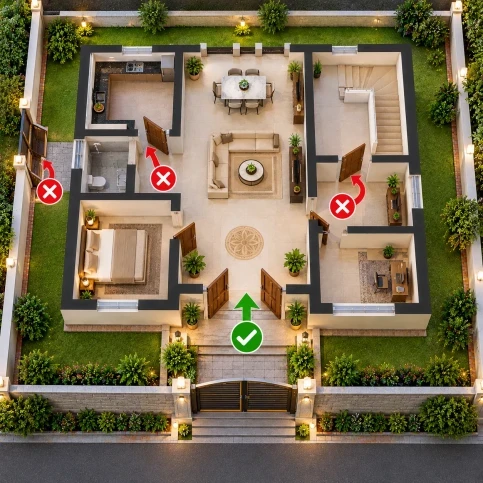
Best 32 Gates Of Vastu Consultant in India
Choosing the Best 32 Gates Of Vastu Consultant in India Delhi Ncr can help property owners understand the detailed entrance and directional divisions used in advanced Vastu Shastra analysis. The 32 Gates approach traditionally divides the outer perimeter of a property into specific entrance zones, with each gate associated with particular Vastu principles and traditional interpretations. An Expert 32 Gates Of Vastu Consultant may assess the main entrance, plot orientation, surrounding directions, gate placement, and overall property layout to understand the suitability of the entrance zone.
At IIAG Jyotish Sansthan, 32 Gates Vastu consultation can include detailed site inspection, compass-based orientation, entrance analysis, property layout assessment, and identification of the relevant gate according to traditional Vastu methods. Recommendations may be provided for residential, commercial, industrial, and other properties based on their individual structure and requirements. This detailed approach can help clients better understand their property's entrance placement while combining traditional Vastu guidance with practical considerations such as architecture, access, safety, and functionality.
32 Gates of Vastu Shastra: Directions, Significance and Effects
The 32 Gates of Vastu Shastra represent a detailed traditional method of analyzing the entrance zones around the boundary of a property. In this approach, the outer perimeter is divided into 32 specific sections or gates, with each zone traditionally associated with particular energies, deities, qualities, and influences. 32 Gates of Vastu analysis goes beyond simply identifying the four main directions by examining the precise position of an entrance or gate within a directional zone.
Each gate is traditionally interpreted according to its location and may be associated with themes such as prosperity, career opportunities, relationships, stability, recognition, growth, or challenges. The suitability of a particular gate is generally evaluated in relation to the property's orientation, purpose, layout, occupants, and other Vastu factors rather than in isolation.
A professional 32-gate assessment may include compass-based direction identification, property boundary analysis, main entrance placement, plot shape, surrounding structures, and the relationship between the entrance and internal spaces. At IIAG Jyotish Sansthan, 32 Gates of Vastu Shastra consultation can provide personalized guidance for residential, commercial, industrial, and plot properties based on traditional Vastu principles and practical site considerations.
32 Gates of Vastu According to Direction
The Direction of 32 Gates of Vastu provides a detailed way to identify and interpret the exact location of a property's entrance or gate. In traditional Vastu Shastra, the boundary of a property can be divided into 32 specific zones across the four primary directions—North, East, South, and West—and their intermediate directional areas. Each gate is traditionally associated with particular energies, deities, qualities, and potential influences.
A 32-gate Vastu assessment considers the precise entrance position rather than evaluating only whether it falls in North, South, East, or West. The gate's location may be analyzed along with the plot orientation, property purpose, internal layout, surrounding structures, and other Vastu factors. A professional consultant can identify the relevant gate and provide personalized recommendations according to traditional Vastu principles. At IIAG Jyotish Sansthan, Vastu Direction of 32 Gates analysis can be applied to residential, commercial, industrial, and plot properties.
North Gates in Vastu
North Gates in Vastu are traditionally associated with prosperity, opportunities, financial growth, and career development. The North side is linked with Lord Kubera and is generally considered favorable for entrances and gates. The exact gate position should be assessed within the 32-gate framework along with the property's orientation, purpose, layout, and other Vastu factors.
North-East Gates in Vastu
North-East Gates in Vastu are traditionally associated with spiritual growth, wisdom, clarity, peace, and positive opportunities. The North-East, or Ishan zone, is considered highly significant in Vastu Shastra. Entrance placement in this area is traditionally evaluated carefully with the overall plot shape, internal layout, and surrounding environment.
East Gates in Vastu
East Gates in Vastu are traditionally connected with the Sun, vitality, growth, recognition, and new beginnings. East-facing entrances are often considered favorable when appropriately positioned within the 32-gate system. The exact gate zone, property usage, entrance design, and overall Vastu layout should be considered before making recommendations.
South-East Gates in Vastu
South-East Gates in Vastu are traditionally associated with the Fire element, energy, activity, and transformation. This direction is known as Agneya and is often connected with kitchens and electrical activities. The exact gate location should be analyzed carefully because different sub-zones within the South-East may have different traditional interpretations.
South Gates in Vastu
South Gates in Vastu are traditionally associated with strength, discipline, stability, and responsibility. Their suitability depends significantly on the precise gate position within the 32-gate division. A professional assessment considers the entrance location, property purpose, plot orientation, internal layout, and surrounding structures before providing Vastu recommendations.
South-West Gates in Vastu
South-West Gates in Vastu are traditionally associated with stability, grounding, strength, and control. The South-West is known as Nairutya and is generally considered a zone requiring careful planning. The precise gate position should be assessed within the 32-gate framework rather than judging the entire South-West direction uniformly.
West Gates in Vastu
West Gates in Vastu are traditionally associated with stability, fulfillment, gains, and completion. The West is connected with Varuna in traditional Vastu interpretations. The suitability of a gate depends on its exact position, plot orientation, building usage, and surrounding conditions. Detailed 32-gate analysis provides a more specific interpretation.
North-West Gates in Vastu
North-West Gates in Vastu are traditionally associated with movement, communication, relationships, travel, and change. Known as Vayavya, this zone is linked with the Air element. The exact gate position within the North-West should be evaluated with the property's overall layout and purpose to provide balanced traditional Vastu guidance.
North-North-East Gates in Vastu
North-North-East Gates in Vastu are traditionally associated with opportunities, clarity, learning, and positive development. This finer directional zone can be considered when identifying the precise location of an entrance. Its interpretation depends on the complete 32-gate layout, property orientation, surrounding areas, and the intended use of the property.
East-North-East Gates in Vastu
East-North-East Gates in Vastu are traditionally connected with knowledge, health, clarity, and growth. This sub-direction combines qualities traditionally attributed to East and North-East. The exact gate position should be assessed alongside the entrance design, plot orientation, internal spaces, and other directional influences for a comprehensive Vastu interpretation.
East-South-East Gates in Vastu
East-South-East Gates in Vastu are traditionally associated with activity, energy, communication, and the Fire element. This zone lies between East and South-East and may have specific traditional interpretations within detailed Vastu analysis. The gate should be evaluated according to its precise position and the property's overall directional arrangement.
South-South-East Gates in Vastu
South-South-East Gates in Vastu are traditionally linked with action, energy, confidence, and dynamic activities. As a finer directional zone, its interpretation depends on the exact gate placement and surrounding property conditions. A detailed 32-gate assessment can consider this zone along with the South and South-East directional influences.
South-South-West Gates in Vastu
South-South-West Gates in Vastu are traditionally associated with stability, discipline, grounding, and protective qualities. This finer zone connects the South with South-West and should not be assessed in isolation. Professional analysis may consider the gate position, plot shape, entrance orientation, building use, and surrounding structures.
West-South-West Gates in Vastu
West-South-West Gates in Vastu are traditionally associated with stability, material responsibilities, strength, and practical matters. This sub-direction connects West and South-West influences. Its suitability as an entrance zone can be evaluated through precise 32-gate analysis, considering the property's orientation, purpose, layout, and other Vastu factors.
West-North-West Gates in Vastu
West-North-West Gates in Vastu are traditionally connected with movement, communication, social interaction, and changing circumstances. This zone combines traditional West and North-West influences. The exact gate placement, entrance direction, property usage, and surrounding environment should be considered to understand its traditional Vastu significance.
North-North-West Gates in Vastu
North-North-West Gates in Vastu are traditionally associated with movement, opportunities, communication, and flexibility. This finer zone lies between North and North-West. Its gate placement can be assessed within the 32-gate framework along with the property's orientation, purpose, entrance design, and surrounding directional zones for personalized Vastu guidance.
32 Gates of Vastu for Different Properties
32 Gates of Vastu for Different Properties provides a detailed approach to evaluating the exact position of entrances and gates according to traditional Vastu Shastra. For residential properties, the gate may be assessed in relation to family well-being, stability, and overall harmony. For offices and commercial spaces, entrance placement can be considered in relation to business activity, opportunities, and growth. Shops and showrooms may require attention to customer movement and accessibility, while factories and industrial properties can be evaluated with respect to functional zones, movement, and operational requirements. For plots, hotels, restaurants, and institutional properties, the 32-gate framework can help assess entrance placement according to the property's purpose and layout. A professional Vastu consultation considers the exact gate position, plot orientation, internal planning, surrounding structures, and practical requirements rather than applying a single rule to every property.
32 Gates of Vastu for Home
32 Gates of Vastu for Home helps evaluate the precise location of the main entrance or gate within the property's 32 directional zones. Traditionally, the entrance may be assessed for family harmony, stability, opportunities, and overall balance. Plot orientation, gate position, internal layout, and surrounding structures are considered together for personalized Vastu guidance.
32 Gates of Vastu for Offices
32 Gates of Vastu for Offices provides a detailed assessment of the office entrance according to traditional Vastu principles. The gate position may be evaluated in relation to business growth, professional opportunities, communication, and workplace movement. A complete assessment considers the building orientation, entrance placement, internal office layout, and practical requirements.
32 Gates of Vastu for Flats and Apartments
32 Gates of Vastu for Flats and Apartments focuses on evaluating the main entrance within the property's directional framework. The entrance zone may traditionally be considered in relation to harmony, stability, opportunities, and comfort. Since apartment layouts differ, entrance direction, floor plan, surrounding spaces, and building orientation should be assessed together.
32 Gates of Vastu for Shops
32 Gates of Vastu for Shops helps analyze the precise entrance or shutter position within the 32-gate framework. Traditionally, gate placement may be considered in relation to customer movement, business activity, visibility, and opportunities. The shop's orientation, entrance location, layout, display area, and surrounding environment should be evaluated together.
32 Gates of Vastu for Factories
32 Gates of Vastu for Factories provides detailed entrance and gate analysis for industrial properties. The gate position may be assessed alongside traditional Vastu considerations for movement, productivity, stability, and operational flow. Plot orientation, main gate, machinery areas, storage, employee movement, and practical industrial requirements should also be considered.
32 Gates of Vastu for Institutions
32 Gates of Vastu for Institutions can be used to assess entrances of schools, colleges, training centres, hospitals, and other institutional properties. Traditionally, the gate position may be considered in relation to learning, communication, stability, and public movement. A complete assessment considers the institution's purpose, orientation, entrance location, campus layout, and surrounding environment.
Vastu Remedies Related to Entrance and 32 Gate Placement
Remedies of 32 Gates of Vastu focus on traditional methods used to address concerns associated with the location, alignment, or design of a property's entrance. Since every property has a different orientation and structural layout, remedies should ideally be recommended after identifying the exact gate zone within the 32-gate framework rather than applying a common solution.
Depending on the assessment, traditional Vastu recommendations may include adjustments to the entrance design, placement of suitable symbols or traditional elements, maintaining cleanliness and proper lighting, improving the entrance pathway, or making appropriate changes to surrounding areas. In some cases, Vastu practitioners may suggest traditional methods such as mantra, prayer, Puja, directional elements, or other Vastu-based practices.
For properties where structural changes are possible, repositioning or modifying the entrance may be considered, but this should be evaluated carefully alongside architectural requirements, safety, accessibility, and local regulations. For existing homes, offices, shops, factories, and institutions where major construction changes are impractical, non-structural recommendations may be explored.
At IIAG Jyotish Sansthan, Remedies of 32 Gates of Vastu can be personalized according to the property's orientation, exact gate position, plot layout, building usage, and other relevant Vastu factors. These remedies are based on traditional Vastu beliefs and should complement practical architectural considerations.
Why Choose a IIAG Jyotish Sansthan?
Choosing 32 Gates of Vastu with IIAG Jyotish Sansthan provides structured and personalized guidance based on traditional Vastu Shastra principles. The 32-gate approach focuses on identifying the precise location of a property's entrance or gate within the directional framework, rather than considering only the four primary directions. IIAG Jyotish Sansthan can assess the property's orientation, plot boundary, main gate, entrance placement, internal layout, and surrounding structures to provide a more detailed Vastu interpretation.
The consultation can be suitable for homes, flats, apartments, offices, shops, factories, institutions, and other properties. Recommendations may include entrance-related Vastu guidance, directional analysis, layout considerations, and suitable traditional remedies where appropriate. Each property is assessed according to its individual structure and purpose, helping avoid one-size-fits-all recommendations.
With 32 Gates of Vastu with IIAG Jyotish Sansthan, clients can receive professional guidance that combines traditional Vastu concepts with practical considerations such as accessibility, functionality, architecture, and safety. The objective is to help property owners understand their entrance placement and make informed decisions according to traditional Vastu principles.




 Vedic Astrology
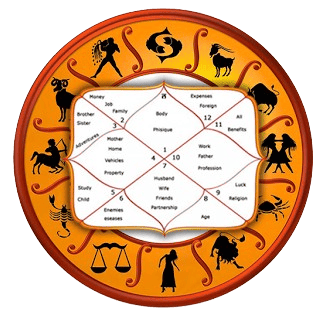 KP Astrology
 Advance KP
 Vastu Shastra
 Astro-Vastu
 Energy Healing
 Astro Advice
 Vastu Guidance
 NG Software
 NJ Patrika
 Gemstone Selection
 Rudraksh Selection