Rashi in Vedic Astrology – Complete Guide to 12 Zodiac Signs
Rashi is one of the basic parts of a Vedic astrology chart. There are twelve Rashis, starting with Mesha and ending with Meena. Each Rashi has its own name, symbol, ruling planet, and place in the zodiac. Your Moon sign is also commonly called your Rashi in Vedic astrology.
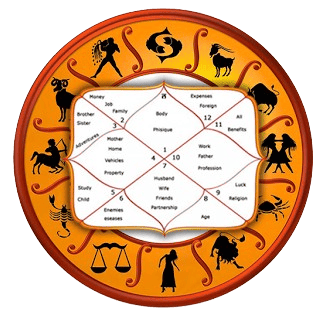
Rashi in Astrology is used while reading a birth chart. The Rashi in which the Moon was placed at the time of birth is known as the Janma Rashi. The Lagna or Ascendant is another important point and should not be confused with the Moon sign.
Zodiac Signs by Astrology are used to understand the qualities connected with each sign. Mesha is Aries, Vrishabha is Taurus, Mithuna is Gemini, and the remaining signs follow the same order.
Rashi in Vedic Astrology also helps in understanding the position of planets. A planet placed in a particular Rashi is read along with its house, aspects, and other details in the horoscope. This is why the same Rashi may be read differently in different birth charts.
KP Astrology also uses the twelve Rashis as part of horoscope analysis. Rashi in KP Astrology is considered along with the planet, star lord, sub lord, cusp, and other KP details.
At IIAG Jyotish Sansthan, we can explain your Rashi and show you where it appears in your birth chart in simple terms.
Mesha (Aries)
Mesha is the first Rashi in Vedic astrology. It is represented by Aries and is ruled by Mars. Mesha is traditionally linked with courage, action, energy, and taking initiative. You can find Mesha in different parts of a birth chart depending on the person’s birth details. The planets placed in Mesha can also add their own meaning to the horoscope.
Vrishabha (Taurus)
Vrishabha is the second Rashi and is represented by Taurus. Venus is its ruling planet. This Rashi is traditionally associated with comfort, stability, possessions, and things a person values. Its place in the Kundli can be different for every person. The planets placed in Vrishabha can also be considered when reading this part of the horoscope.
Mithuna (Gemini)
Mithuna is the third Rashi in the zodiac and corresponds to Gemini. Mercury rules this Rashi. It is traditionally associated with communication, learning, ideas, and interaction with others. The position of Mithuna in the Kundli depends on the birth details. The planets placed there can also change the way this Rashi is read in the horoscope.
Karka (Cancer)
Karka is the fourth Rashi and corresponds to Cancer. The Moon is its ruling planet. Traditional Vedic astrology connects Karka with home, family, emotions, and personal matters. The Rashi can appear in different houses depending on the birth chart. The Moon and other planets connected with Karka can also be looked at while reading the Kundli.
Simha (Leo)
Simha is the fifth Rashi and is represented by Leo. The Sun rules this Rashi. It is traditionally associated with confidence, authority, self-expression, and leadership. The position of Simha in a Kundli depends on the person’s birth details. The planets placed in this Rashi can also be studied to understand how Simha works in that particular horoscope
Kanya (Virgo)
Kanya is the sixth Rashi and corresponds to Virgo. Mercury is its ruling planet. Kanya is traditionally associated with practical thinking, details, learning, and everyday work. Its position can be different from one birth chart to another. The planets placed in Kanya are also considered because they can add their own meaning to this Rashi.
Tula (Libra)
Tula is the seventh Rashi and is represented by Libra. Venus rules this Rashi. Traditional astrology associates Tula with relationships, balance, agreements, and social interaction. Its position in the Kundli depends on the birth details. The planets placed in Tula can also be looked at when understanding how this Rashi appears in a particular horoscope.
Vrischika (Scorpio)
Vrischika is the eighth Rashi and corresponds to Scorpio. Mars is its traditional ruling planet in Vedic astrology. Vrischika is associated with determination, depth, change, and matters that may not be visible at first. Its position in the Kundli and the planets placed in it can both be considered when reading this Rashi.
Dhanu (Sagittarius)
Dhanu is the ninth Rashi and is represented by Sagittarius. Jupiter rules this Rashi. Traditional astrology connects Dhanu with learning, knowledge, beliefs, travel, and wider thinking. The position of Dhanu depends on the birth chart. Jupiter and other planets connected with this Rashi can also be considered while understanding its role in the horoscope.
Makara (Capricorn)
Makara is the tenth Rashi and corresponds to Capricorn. Saturn is its ruling planet. This Rashi is traditionally associated with work, responsibility, discipline, and long-term efforts. Its position in the Kundli can be different for every person. The planets placed in Makara can also be looked at to understand the Rashi in that particular birth chart.
Kumbha (Aquarius)
Kumbha is the eleventh Rashi and is represented by Aquarius. Saturn is its traditional ruling planet. Kumbha is associated with groups, ideas, wider social matters, and long-term goals. Its position in a birth chart depends on the person’s birth details. The planets placed in Kumbha can also add their own meaning when the horoscope is read.
Meena (Pisces)
Meena is the twelfth and final Rashi in the zodiac and corresponds to Pisces. Jupiter is its traditional ruling planet. Meena is associated with imagination, spirituality, compassion, and inner matters. Its position in the Kundli depends on the birth details. The planets placed in Meena can also be considered when understanding this Rashi in a particular horoscope.
Rashi by Date of Birth – Find Your Zodiac Sign
Your date of birth is used to find different details in a birth chart. Rashi by Date of Birth usually refers to finding the zodiac sign connected with your birth details. In Vedic astrology, the exact time and place of birth are also important because the Moon and other planets can change their positions.
People often search for their Zodiac Sign by Date of Birth because they want to know which Rashi belongs to them. The twelve Rashis are Mesha, Vrishabha, Mithuna, Karka, Simha, Kanya, Tula, Vrischika, Dhanu, Makara, Kumbha, and Meena.
Your Rashi is not simply chosen from a general date range in the same way as a newspaper Sun-sign horoscope. A proper Kundli uses the birth date, birth time, and birthplace to calculate the planetary positions.
The Rashi can then be seen along with the houses, planets, Nakshatra, and other parts of the horoscope. This gives a more complete picture of the birth chart.
At IIAG Jyotish Sansthan, you can share your birth details and find out your Rashi. We can also explain where it appears in your Kundli and what it means in simple terms.
What is the Importance of Rashi in Vedic Astrology?
Rashi is an important part of a Vedic astrology chart. The twelve Rashis are used to understand where the planets were placed at the time of birth. The Rashi connected with the Moon is also used when finding the Janma Rashi.
The Importance of Rashi in Vedic Astrology can be seen when reading the planets in a Kundli. A planet does not give the same reading simply because it is present in a chart. Its Rashi, house, lord, and other connections are also looked at.
Rashi is also used while discussing personality, relationships, career, family matters, and other areas shown in the horoscope. The exact interpretation depends on the complete chart.
In KP Astrology, the Rashi is still part of the chart, but the reading goes further. Importance of Rashi in kp Astrology can be understood along with the star lord, sub lord, cusps, and significators used in KP.
At IIAG Jyotish Sansthan, we can explain the Rashi shown in your Kundli and how it fits with the other details of your horoscope.
Lagna Rashi or Ascendant in Vedic Astrology
Lagna is the Rashi that was rising on the eastern horizon at the time of birth. It is also called the Ascendant. Since the rising sign changes with time, the exact birth time is important when finding it.
Lagna Rashi in Vedic Astrology is used to set the houses of the birth chart. Once the Lagna is known, the other Rashis are placed through the twelve houses. The planets are then studied according to the houses and Rashis they occupy.
Ascendant in Vedic Astrology is different from the Moon sign. Your Moon may be in one Rashi while your Lagna is in another. Both have their own place in a horoscope.
KP Astrology also uses the Ascendant and its cusp. Lagna Rashi in kp Astrology can be looked at along with the Ascendant degree, star lord, sub lord, and other KP details. Ascendant in kp Astrology is therefore more than simply knowing the name of the rising Rashi.
At IIAG Jyotish Sansthan, we can check your birth time and explain your Lagna, Ascendant, and the houses that start from it.
Janma Rashi or Moon’s Zodiac Sign in KP Astrology
Janma Rashi is the Rashi in which the Moon was placed at the time of birth. This is why the Moon's exact position is needed when finding it. Janma Rashi in Vedic Astrology is commonly used while reading a person's horoscope and understanding the Moon's place in the chart.
Janma Rashi in kp Astrology can also be seen in the KP birth chart. In KP, the Moon's star lord and sub lord are given additional importance along with its Rashi and other planetary details.
The Moon in Vedic Astrology is traditionally connected with the mind, emotions, habits, and personal responses. Its position in the birth chart can therefore be discussed along with the Rashi and house.
In Moon in kp Astrology, the Moon can be studied through KP's star lord, sub lord, and significators. This gives more detail than simply knowing which Rashi the Moon occupies.
You can find your Janma Rashi by sharing your date, time, and place of birth. At IIAG Jyotish Sansthan, we can explain the Moon's Rashi and its place in your Kundli in simple language.
Quick Answer: Janma Rashi is the zodiac sign in which the Moon was positioned at the time of birth. In Vedic astrology, it is also commonly referred to as the Moon Sign. The exact birth date, time and place are used to determine the Moon's position.
Rashi Analysis According to Kundli
Rashi analysis becomes more useful when the complete Kundli is available. Rashi Analysis by Kundli looks at the Rashis along with the planets, houses, Lagna, Moon, and other details shown in the chart.
A single Rashi does not tell the whole story. The same Rashi can appear in different houses for different people, and the planets connected with it can also be different. This is why two people with the same Rashi may have different birth charts.
With Rashi Analysis by Birth chart, the position of each planet can be checked along with the Rashi it occupies. The Rashi lord can also be studied. These details are useful when discussing areas such as career, education, relationships, family, business, and other matters shown in the horoscope.
The Moon sign and Lagna are also part of this discussion. Their positions help give more context to the rest of the chart.
At IIAG Jyotish Sansthan, you can share your birth details and get your Kundli checked. We explain the Rashi positions and other chart details in simple terms, so you can understand what is being seen in your horoscope.
Expert Rashi in Astrology Consultation in India
Get personalized guidance with Rashi in Astrology Consultation in India to understand the astrological significance of your Moon Sign (Rashi) and its influence on different aspects of life. At IIAG Jyotish Sansthan, Rashi-based consultation can help you explore traditional astrological perspectives on career, marriage, relationships, finances, and personal development. The consultation considers relevant birth details and horoscope placements to provide insights according to Vedic astrology principles.
If you are looking for Rashi in Astrology Consultation in Delhi NCR, expert guidance can help you understand your Rashi, planetary influences, and important combinations in your birth chart. An Expert Rashi in Astrology Consultation may also help you explore favorable periods, potential challenges, and traditional astrological remedies based on your Kundli.
Whether you need personalized horoscope guidance or want to understand your Moon Sign more deeply, choosing the right consultation can help you explore your questions with greater clarity. If you are searching for Rashi in Astrology Consultation near me, IIAG offers an opportunity to enquire about astrology consultation services and available guidance options. Share your accurate birth date, time, and place to support a more detailed horoscope analysis and receive personalized insights based on traditional Vedic astrology.
Why Choose IIAG for Rashi in Astrology?
Selecting IIAG Jyotish Sansthan for Rashi analysis guarantees an authentic, data-backed approach to understanding your zodiac sign and life trajectory. Guided by Dr. Yagyadutt Sharma, the institute moves beyond generic sun-sign horoscopes by integrating core Vedic Astrology, KP Astrology, and real-time planetary transits (Gochar) to evaluate your exact Moon sign (Chandra Rashi) and Ascendant (Lagna). By decoding the specific ruling planets, nakshatras, and elemental properties tied to your Rashi, IIAG’s expert astrologers deliver precise predictions regarding career choices, financial growth, relationship compatibility, and health tendencies. Choosing IIAG ensures personalized, non-invasive remedies—including gemstone recommendations, Rudraksha guidance, and Astro-Vastu alignments—tailored specifically to offset planetary afflictions and maximize the positive energies of your birth chart.




 Vedic Astrology
 KP Astrology
 Advance KP
 Vastu Shastra
 Astro-Vastu
 Energy Healing
 Astro Advice
 Vastu Guidance
 NG Software
 NJ Patrika
 Gemstone Selection
 Rudraksh Selection