



Best Vastu Vidya Consultant in India
Choose professional Vastu guidance from IIAG Jyotish Sansthan for a structured understanding of traditional Vastu Vidya and its application to residential, commercial, and professional spaces. If you are searching for the Best Vastu Vidya Consultant in India Delhi Ncr, our consultation focuses on property orientation, layout, directions, entrances, gates, and traditional Vastu principles.
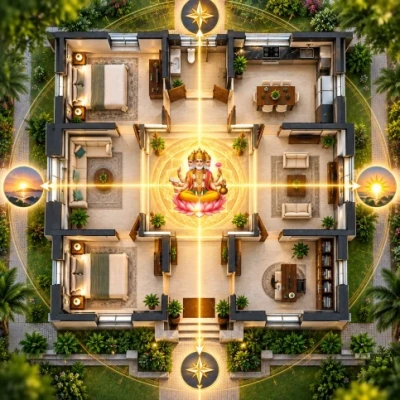
Our Expert Vastu Vidya approach can include detailed assessment of directional zones and spatial arrangements. A Vastu Vidya Consultant for Directions can help evaluate the eight directions, directional zones, and their traditional significance within a property. Consultation may also include a Vastu Vidya Consultant for 45 devta, focusing on the traditional Vastu Purusha Mandala and placement of the 45 Devtas.
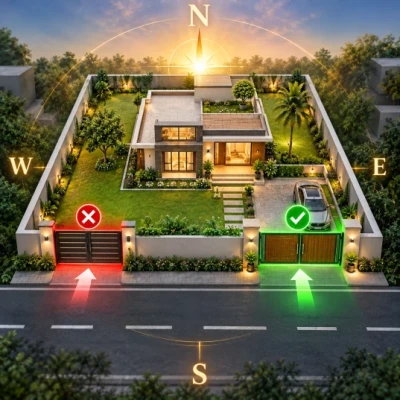
For entrance analysis, a Vastu Vidya Consultant for Main gate can assess the entrance direction, location, and traditional Vastu considerations. A Vastu Vidya Consultant for 32 gate can further examine the traditional 32 gate divisions and their significance for property planning.
Whether you are planning a new property or reviewing an existing space, IIAG provides personalized Vastu consultation based on the property's orientation, floor plan, and functional requirements. Book your Vastu Vidya consultation with IIAG Jyotish Sansthan for professional and traditional Vastu guidance.
Fundamental Principles of Vastu Vidya
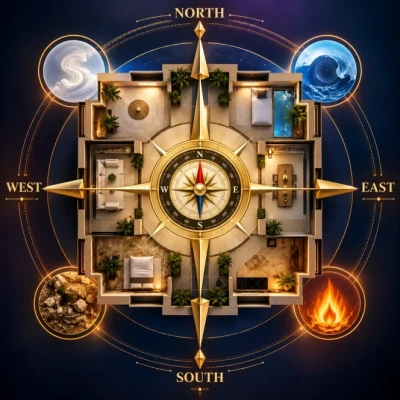
Vastu Vidya is a traditional Indian system of spatial planning that focuses on the relationship between a property, its directions, layout, and the natural environment. The fundamental principles of Vastu Vidya begin with understanding the orientation of a property and the proper use of the eight directions—North, South, East, West, Northeast, Southeast, Southwest, and Northwest. Each direction is traditionally associated with specific energies, elements, and functional considerations.
Vastu Vidya also considers the Vastu Purusha Mandala, including the traditional placement of the 45 Devtas, to understand different zones within a property. The location of the main entrance, 32 gate divisions, Brahmasthan, rooms, kitchen, bedrooms, पूजा or meditation areas, and other functional spaces can be evaluated according to traditional Vastu principles.
Other important considerations include the balance of the five elements—Earth, Water, Fire, Air, and Space—along with proportions, openness, natural light, ventilation, and spatial functionality. These principles can be applied to residential, commercial, office, and other properties to create a thoughtfully planned environment based on traditional Vastu Vidya.
Vastu Vidya Guidelines of 16 Directions
The 16 Directions in Vastu Vidya provide a traditional framework for understanding different zones of a property. Each direction is associated with specific elements, qualities, and functional considerations. Vastu analysis may evaluate entrances, rooms, activities, openness, and placements across these directions to support balanced and purposeful space planning.
Vastu Vidya Guidelines of 45 Devta
The 45 Devtas in Vastu Vidya are traditionally represented within the Vastu Purusha Mandala. Each Devta is associated with a particular zone and directional position. Their traditional significance can be considered while analyzing property layouts, room placements, entrances, and energy zones according to established Vastu principles.
Vastu Vidya Guidelines of 32 Gates
The 32 Gates in Vastu Vidya represent traditional divisions of the property's perimeter, particularly for entrance and boundary analysis. Each gate position has a distinct traditional significance. Vastu consultation may assess the location and direction of a main entrance according to these 32 gate divisions and the overall property layout.
Vastu Vidya Guidelines of Main Gate
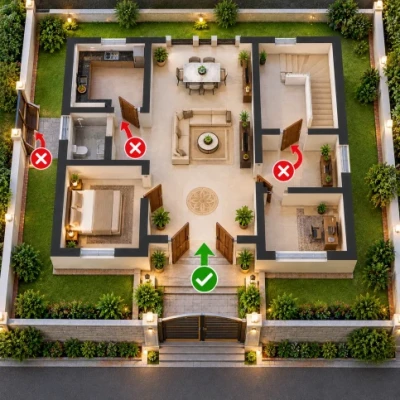
The Main Gate in Vastu Vidya is an important consideration because it is traditionally viewed as the primary entry point of a property. Its direction, placement, gate division, proportions, and surrounding space may be assessed using traditional Vastu principles while also considering practical factors such as accessibility, security, and functionality.
Vastu Vidya for Different Types of Spaces
Vastu Vidya for Different Types of Spaces helps apply traditional Vastu principles according to the purpose, layout, orientation, and functional requirements of a property. At IIAG Jyotish Sansthan, Vastu consultation can be customized for residential, commercial, hospitality, and professional spaces.
Vastu Vidya for Home focuses on the main entrance, room placement, kitchen, bedrooms, पूजा or meditation area, Brahmasthan, directions, and overall spatial balance. Traditional Vastu considerations can be used while planning or reviewing an existing residence.
Vastu Vidya for Flats and Apartments considers the apartment's entrance, internal layout, kitchen, bedrooms, balconies, toilets, directional zones, and available space, while taking the building structure into account.
Vastu Vidya for Offices can evaluate entrance placement, workstations, cabins, reception, meeting areas, storage, and other functional zones according to traditional directional principles.
Vastu Vidya for Restaurants and Hotels considers entrances, reception, kitchen, dining areas, guest rooms, service areas, and circulation spaces. These principles can support thoughtful space planning while maintaining practical requirements such as accessibility, ventilation, and functionality.
Benefits and Applications of Vastu Vidya
Vastu Vidya provides a traditional framework for planning and evaluating spaces according to directions, elements, proportions, entrances, and functional zones. Its applications can extend across residential, commercial, and professional properties. By considering the orientation and layout of a space, Vastu Vidya can help create a more organized and purpose-oriented environment.
For homes, traditional Vastu principles may be applied to the main entrance, bedrooms, kitchen, पूजा area, Brahmasthan, and other important spaces. In offices and commercial properties, they can be considered for entrances, workstations, cabins, reception areas, and functional zones. Vastu Vidya can also be applied to flats, apartments, shops, restaurants, hotels, factories, and plots.
The approach may further include analysis of 16 directions, 32 gates, 45 Devtas, Vastu Purusha Mandala, and the five elements. When combined with practical considerations such as ventilation, accessibility, lighting, and usability, Vastu Vidya can support thoughtful and balanced space planning.
Better Spatial Planning
Vastu Vidya provides traditional guidelines for organizing spaces according to directions, zones, entrances, and functional requirements. It can help in thoughtfully planning room placement, circulation areas, open spaces, and important property zones while maintaining practical considerations such as accessibility, ventilation, and usability.
Balanced Use of Different Areas
Vastu Vidya encourages thoughtful allocation of different areas based on their traditional directional significance. Bedrooms, kitchens, workspaces, entrances, storage areas, and other spaces can be evaluated according to their intended functions and location within the property.
Traditional Energy-Balance Concepts
Traditional Vastu Vidya considers the relationship between the five elements—Earth, Water, Fire, Air, and Space—and different directional zones. These concepts provide a traditional framework for assessing spatial arrangements and creating a more harmonious approach to property planning.
Improved Awareness of Space and Direction
Vastu Vidya develops greater awareness of property orientation, directions, zones, entrances, and spatial relationships. Understanding these factors can help property owners and planners evaluate layouts more systematically and make informed decisions based on traditional Vastu principles.
Applications in Residential and Commercial Planning
Vastu Vidya can be applied to homes, flats, apartments, offices, shops, restaurants, hotels, factories, and other properties. It may guide considerations such as main entrances, room placement, work areas, functional zones, and overall layout while adapting traditional principles to modern practical requirements.
What Are Vastu Vidya Remedies?
Vastu Vidya remedies are traditional methods used to address certain Vastu-related imbalances in a property without necessarily making major structural changes. These remedies may include appropriate placement of Vastu materials, Yantras, symbols, colours, elements, plants, or other traditional corrective measures based on the property's direction and layout. Vastu Shastra Vidya remedies can be considered for entrances, directional zones, Brahmasthan, rooms, and other important areas. The selection of a remedy should ideally be based on the property's orientation, floor plan, and specific Vastu considerations, while also maintaining practical functionality and safety.
Vastu Remedies for Directional Imbalances
Vastu remedies for directional imbalances are traditional measures used to address certain spatial concerns associated with different directions. Depending on the property layout, remedies may include appropriate placement of Vastu materials, colours, symbols, elements, or Yantras. These measures should be selected according to the specific orientation and requirements of the property.
Vastu Remedies for Entrance and Main Door
Vastu remedies for entrance and main door focus on traditional considerations related to direction, gate position, proportions, and surrounding space. Depending on the assessment, remedies may include suitable Vastu symbols, colours, materials, or other non-structural measures. Practical factors such as accessibility, security, and proper door functioning should also be maintained.
Vastu Remedies for Home
Vastu remedies for home may be considered for specific concerns related to room placement, directions, entrances, kitchen, bedrooms, toilets, or other areas. Traditional remedies can include suitable Vastu materials, Yantras, colours, symbols, and placement adjustments, selected according to the home's floor plan and orientation.
Vastu Remedies for Office
Vastu remedies for office can address traditional Vastu considerations related to entrances, workstations, cabins, reception areas, meeting rooms, storage, and directional zones. Depending on the layout, non-structural remedies such as suitable colours, symbols, materials, or placement adjustments may be considered while preserving workplace functionality.
Why Choose a IIAG Jyotish Sansthan?
Choose Vastu Vidya with IIAG Jyotish Sansthan for structured and traditional Vastu guidance based on property orientation, layout, directions, entrances, and functional requirements. Our consultation can be customized for Vastu Vidya for Residential properties, including homes and apartments, as well as Vastu Vidya for Commercial spaces such as offices, shops, hotels, and restaurants. We also provide guidance for Vastu Vidya for Industrial properties, including factories and industrial plots. IIAG focuses on practical application of traditional Vastu principles while considering the individual characteristics of each property.








 Vedic Astrology
 KP Astrology
 Advance KP
 Vastu Shastra
 Astro-Vastu
 Energy Healing
 Astro Advice
 Vastu Guidance
 NG Software
 NJ Patrika
 Gemstone Selection
 Rudraksh Selection