

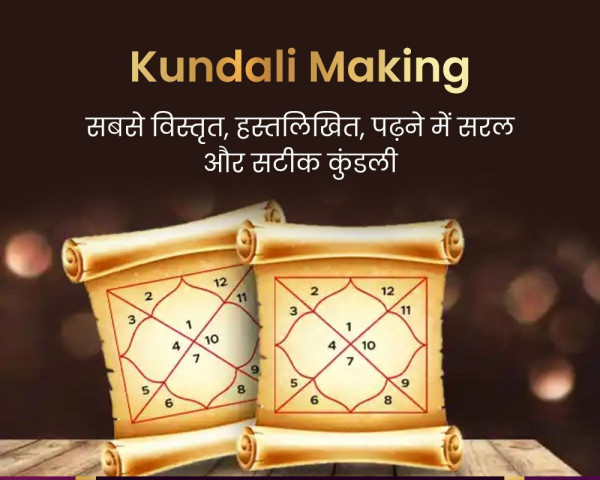
NJ Patrika Premium Edition – Complete Kundli & KP Astrology Report
Discover deeper insights into your life with the NJ Patrika Premium Edition, designed for those seeking a detailed and comprehensive astrology report. This premium service combines traditional Vedic astrology with KP Astrology principles to provide a structured view of important life areas.
The NJ Premium Kundli offers a detailed birth chart prepared using your date, time, and place of birth. With a Complete Kundli Report, you can explore planetary positions, houses, Nakshatras, Dashas, Yogas, and other significant astrological factors in one comprehensive report.
For those looking for greater detail, Advanced Kundli Analysis examines planetary influences and their connections with different areas of life. The report can help you understand themes related to career, education, relationships, finances, health, and important life events from an astrological perspective.
You can also generate a Kundali by Date of birth, using accurate birth details to create your personalized horoscope. The NJ Patrika Premium Edition is suitable for beginners as well as astrology enthusiasts who want a more detailed understanding of their birth chart.
Explore your horoscope with a professional, organized, and easy-to-understand Complete Kundli Report through NJ Patrika Premium Edition.
NJ Patrika Premium Birth Details & Horoscope Charts
NJ Patrika Premium provides detailed Birth Details and comprehensive Janam Kundli Details to help users explore their Vedic astrology profile. By entering accurate birth date, time, and place, users can access precise Birth Chart Calculation based on traditional astrological principles. The platform also includes Birth Panchang, offering important Panchang information connected with the birth time and location.
With detailed Horoscope Charts, NJ Patrika Premium presents essential planetary positions, houses, signs, and other astrological information in an easy-to-understand format. Users can also explore traditional Vedic astrology components such as the Avakhada Chakra, which organizes important birth-related details, and the Ghat Chakra, which provides additional calculations used in horoscope analysis.
These features make the premium horoscope experience useful for studying a complete Janam Kundli in one place. Whether you are reviewing planetary placements, understanding birth-related calculations, or exploring traditional Kundli elements, NJ Patrika Premium brings multiple astrological charts and calculations together for convenient reference.
Kundli & Birth Charts Included in Premium Edition
The Premium Edition provides a detailed collection of astrological charts designed to give deeper insights into your horoscope. It includes the Lagna Chart, which forms the foundation of Vedic astrology and helps understand personality, life direction, and major areas of life. The complete Birth Chart presents the planetary placements at the time of birth, while the Bhav Chalit Chart offers a house-wise view for more precise interpretation.
You can also explore the Planetary Position in Kundli, making it easier to understand the placement and influence of planets across different houses and signs. With comprehensive Kundli Analysis, the Premium Edition helps you examine important astrological combinations and patterns.
For advanced interpretation, the package includes the Navamsha Chart (D9 Chart), widely used for assessing marriage, relationships, and the deeper strength of planets. The Moon Chart provides another perspective based on the Moon sign and is useful for understanding the emotional and mental dimensions of life.
Additionally, the Jaimini Karaka details offer valuable insights through the Jaimini system of astrology. Together, these charts provide a comprehensive foundation for a detailed and structured horoscope analysis.
Lagna Chart for Birth Horoscope Analysis
The Lagna Chart is a fundamental component of Vedic astrology, offering insights into personality, physical traits, life direction, and major experiences. It is prepared using the exact birth date, time, and place. By examining the Ascendant, planetary positions, houses, and their relationships, astrologers assess areas such as career, relationships, finances, health, and overall life patterns. A detailed Lagna Chart provides the foundation for comprehensive birth horoscope analysis.
Bhav Chalit Chart & House Position Analysis
Bhav Chalit Chart provides a refined view of planetary house positions in Vedic astrology. It helps identify the actual houses occupied by planets and clarifies their influence on different life areas. By analyzing house shifts, planetary placements, and house lords, astrologers can gain deeper insights into career, relationships, finances, health, and personal growth, complementing the traditional birth chart for more precise interpretation.
Planetary Position in Birth Chart
The planetary position in a birth chart reveals how celestial bodies influence different areas of life. Each planet occupies a specific zodiac sign and house at the time of birth, shaping personality, relationships, career, finances, and overall life experiences. Studying these placements helps identify strengths, challenges, and important life patterns, while aspects between planets provide deeper insights into individual tendencies and potential.
Cusp Position Analysis in Kundli
Cusp Position Analysis in Kundli helps understand the exact starting point of each house in a birth chart. It examines the degree, sign, and planetary influences connected with every cusp to provide deeper insights into different life areas. By studying cusp positions, astrologers can assess relationships, career, finances, health, and other important matters more precisely, making Kundli interpretation more detailed and personalized.
Navamsha Chart – D9 Analysis
The Navamsha Chart (D9) is a key divisional chart in Vedic astrology, especially for understanding marriage, relationships, dharma, and the deeper strength of planets. It complements the birth chart by revealing how planetary influences mature over time. D9 analysis examines the Navamsha ascendant, seventh house, Venus, Jupiter, and planetary placements to provide deeper insights into marital life, spiritual growth, and overall destiny.
Moon Chart – Chandra Kundli
Moon Chart, also known as Chandra Kundli, is an important tool in Vedic astrology. It is prepared by placing the Moon sign as the first house and analyzing planetary positions from the Moon. Chandra Kundli helps understand the mind, emotions, mental tendencies, relationships, and inner experiences. It also provides insights into how planetary influences may affect daily life, emotional balance, and personal responses.
Karkansh Chart Analysis
Karkansh Chart Analysis helps understand your deeper life purpose, career direction, spiritual inclinations, and inner potential. In Vedic astrology, the Karkansh chart is derived from the Atmakaraka and provides insights into important life themes. By examining planets, houses, and their combinations, astrologers can interpret talents, challenges, professional tendencies, spiritual growth, and significant areas of personal development more deeply.
Swansh Chart Analysis
Swansh Chart Analysis provides insights into a person’s inner nature, emotional patterns, instincts, and deeper personality traits. It helps explore subconscious tendencies, strengths, challenges, and behavioral patterns that may not be clearly visible in the main birth chart. By studying planetary influences and their placements, Swansh analysis can offer a deeper understanding of personality, decision-making, relationships, and personal growth.
Jaimini Karaks Analysis
Jaimini Karaks Analysis is an important technique in Vedic astrology that examines planetary significators to understand different areas of life. Karakas such as Atmakaraka, Amatyakaraka, Darakaraka, and others provide insights into personality, career, relationships, responsibilities, and life lessons. By studying their placement, sign, house, and connections, astrologers can gain a deeper understanding of an individual’s strengths, challenges, and significant life experiences.
What Panchang Details Are Included in the Premium Kundli?
The Premium Kundli provides detailed Birth Panchang information to help you understand the astrological influences present at the time of birth. Panchang details form an important foundation for interpreting a birth chart and can provide valuable insights into various aspects of life.
The report includes Lagna Prediction, which focuses on the Ascendant and its influence on personality, appearance, behavior, and overall life approach. Rashi Prediction explains the Moon sign and offers insights into emotional patterns, thinking, and personal tendencies.
With Nakshatra Prediction, you can explore the birth star and its significance in shaping personality, habits, and life experiences. The report also identifies the Nakshatra Charan, providing a more specific understanding of the Nakshatra's influence.
The Premium Kundli further includes Karan Prediction, which examines the Karan prevailing at birth and its traditional astrological significance. Yog Prediction provides information about the specific Yog formed in the Birth Panchang and its potential influence according to Vedic astrology.
Together, these Panchang details offer a structured overview of the celestial conditions at the time of birth. By combining Lagna, Rashi, Nakshatra, Charan, Karan, and Yog information, the Premium Kundli provides a comprehensive foundation for deeper horoscope analysis and interpretation.
What Is Lagna Prediction in a Kundli?
Lagna prediction in a Kundli refers to understanding the influence of the Ascendant, or Lagna, on a person’s life. It represents the zodiac sign rising on the eastern horizon at the time of birth. Lagna prediction examines personality, physical traits, behavior, strengths, and overall life direction. By analyzing the Lagna, its ruling planet, and planetary positions, astrologers interpret important aspects of an individual’s life and potential experiences.
What Does Rashi Prediction Tell You?
Rashi prediction offers insights into different aspects of life based on your Moon sign, or Rashi. It can highlight possible trends in career, relationships, finances, health, and personal growth. By understanding planetary influences and their movements, you can gain a broader perspective on upcoming opportunities and challenges. Rashi predictions can also help you reflect on your decisions, emotions, and priorities with greater awareness.
What Is Nakshatra Prediction?
Nakshatra prediction is a Vedic astrology practice that interprets the influence of the Moon’s position in one of the 27 Nakshatras, or lunar constellations, at the time of birth. Each Nakshatra is associated with specific qualities, symbols, and planetary influences. By studying your birth Nakshatra, astrologers may provide insights into personality traits, relationships, career, emotions, and important life patterns based on traditional Vedic astrology principles.
What Is Nakshatra Charan Prediction?
Nakshatra Charan Prediction is a Vedic astrology method that interprets the specific quarter, or Charan, of a Nakshatra in which a person is born. Each Nakshatra has four Charans, and each carries distinct qualities, influences, and characteristics. By examining the birth Nakshatra and its Charan, astrologers can understand personality traits, behavioral patterns, strengths, challenges, and potential life tendencies with greater detail.
What Is Karan in Panchang?
Karan in Panchang is one of the five essential elements used in Vedic astrology to determine the quality of a day. It represents half of a Tithi and helps assess whether a particular time is favorable for specific activities. There are 11 Karanas, including movable and fixed Karanas, each associated with distinct qualities. Karan is commonly considered while selecting auspicious Muhurat for important tasks and ceremonies.
What Is Yog Prediction in Astrology
Yog prediction in astrology refers to the interpretation of specific planetary combinations in a birth chart. These combinations, known as Yogas, are believed to influence different areas of life, such as career, wealth, relationships, health, and spiritual growth. Astrologers examine the positions, strengths, and relationships of planets and houses to identify significant Yogas and understand their potential effects during different periods of life.
Bhav Spasth & House System Analysis in Kundli
Bhav Spasth is an important concept in Vedic astrology that helps determine the precise influence and strength of different houses in a Kundli. House Analysis in Kundli examines each house, its ruling planet, occupants, aspects, and planetary relationships to understand areas such as career, finances, marriage, health, and education. Accurate house interpretation can provide greater clarity when analyzing planetary effects and Yogas. Bhav Spasth Analysis in NJ Patrika Premium offers a structured approach to examining house positions and their influences, helping users explore their Kundli with greater detail and understand important astrological patterns more systematically.
Shripati System in Kundli
The Shripati System in Kundli is a house division method used in astrology to determine the precise boundaries of each Bhava. It considers the Ascendant and Midheaven while calculating house cusps, helping astrologers understand planetary placement more accurately. This system can provide additional clarity when interpreting house-related matters, planetary influences, Yogas, and significant life areas shown in a birth chart.
Equal House System in Astrology
The Equal House System in Astrology divides the zodiac into twelve houses of equal 30-degree sections, beginning from the Ascendant degree. Each house represents a specific area of life, including personality, wealth, communication, family, career, relationships, and more. This straightforward approach makes house interpretation easier and provides a consistent framework for examining planetary placements within different Kundli houses.
House Position & Bhav Calculation in Kundli
House Position & Bhav Calculation in Kundli helps determine where planets are placed and how their influences may operate across different areas of life. Accurate Bhav calculation considers the Ascendant, house boundaries, planetary degrees, and selected house system. By examining these factors, astrologers can interpret house strengths, planetary effects, Yogas, and other important patterns in a Kundli more precisely.
Rashi Phal & Bhav Phal Analysis in Kundli
Rashi Phal and Bhav Phal Analysis in Kundli help interpret how planetary positions may influence different areas of life. Rashi Phal focuses on the zodiac sign and its planetary influences, while Bhav Phal Analysis in Kundli examines the twelve houses and their significance. Astrologers also consider Grah Yuti, where two or more planets occupy the same sign or house. This Planetary Conjunction can create specific influences depending on the nature, strength, and placement of the planets involved. Together, these analyses provide a detailed understanding of personality, career, relationships, finances, health, and other important life areas.
What Is Rashi Phal Based on Birth Chart
Rashi Phal based on a birth chart refers to astrological predictions made by studying the zodiac sign (Rashi) and its planetary influences at the time of birth. It provides insights into personality, relationships, career, finances, health, and important life events. Unlike general horoscope predictions, birth-chart-based Rashi Phal considers the individual’s exact birth details for a more personalized interpretation.
What Is Bhav Phal Analysis in Kundli
Bhav Phal Analysis in Kundli is the process of interpreting the results and influences associated with each of the twelve houses. It examines the house lord, planets placed in the house, aspects, and planetary strength to understand different life areas such as career, wealth, relationships, health, education, and family. This analysis helps provide a detailed understanding of how various planetary combinations may influence specific aspects of life.
What Is Grah Yuti Phal
Grah Yuti Phal refers to the effects produced when two or more planets come together in the same zodiac sign or house in a birth chart. In Vedic astrology, the nature of these results depends on the planets involved, their strength, house placement, zodiac sign, aspects, and overall chart combinations. Grah Yuti can influence areas such as career, relationships, finances, health, personality, and spiritual growth.
What Is Planetary Conjunction Analysis in Kundli
Planetary conjunction analysis in Kundli examines the effects of two or more planets placed in the same zodiac sign or house. In Vedic astrology, such combinations can influence personality, relationships, career, finances, and life experiences. The nature of the conjunction depends on the planets involved, their strength, house placement, zodiac sign, aspects, and overall chart. This analysis helps understand how different planetary energies interact.
Planetary Relationship Analysis in Kundli
Planetary Relationship Analysis in Kundli examines how planets interact with each other and how these relationships may influence different areas of life. Natural Planetary Relationships Analysis in Kundli considers the inherent friendships, neutral relationships, and enmities between planets. Temporary Planetary Relationships Analysis in Kundli evaluates relationships based on the planets’ positions in specific houses within a birth chart. By combining these factors, astrologers assess Effective Planetary Relationships Analysis in Kundli to understand the overall strength and influence of planetary interactions. Planetary Friendship & Relationship Analysis in Kundli can provide insights into combinations affecting career, finances, education, relationships, personality, and decision-making. The analysis also considers planetary dignity, house placement, aspects, conjunctions, and other chart factors for a broader interpretation. Understanding these planetary relationships can help explain why certain planetary combinations may produce supportive or challenging influences in different periods of life, according to Vedic astrology.
What Is KP Astrology Analysis in NJ Patrika Premium
KP Astrology analysis in NJ Patrika Premium uses the principles of Krishnamurti Paddhati to provide a detailed and precise interpretation of your birth chart. With Kundali Analysis by KP Astrology, you can explore important life areas such as career, marriage, education, finances, and major events. A KP Kundli focuses on planetary positions, star lords, sub-lords, and house significations. KP Cusp Analysis further examines the cusps of different houses to understand specific life outcomes. This approach helps interpret planetary influences systematically and offers deeper insights into the timing and possibilities indicated in your Kundli.
House Significators in KP Astrology
House Significators in KP Astrology identify the houses connected with specific planets and help interpret different areas of life. They are determined through planetary occupation, ownership, star lord, and sub-lord relationships. By examining these significators, astrologers can understand the potential influence of planets on career, marriage, education, finances, health, and other important life matters.
Planet Significators
Planet Significators in KP Astrology show the houses and life areas represented by each planet in a Kundli. Their significance is assessed through the planet’s position, ownership, star lord, and sub-lord. Studying these connections helps provide a structured understanding of planetary influences and their possible role in important events, decisions, relationships, career, and personal development.
Four Step Cusp Table
The Four Step Cusp Table in KP Astrology provides a detailed view of each house cusp and its planetary connections. It considers the cusp sub-lord and related significator levels to examine specific areas of life. This analysis can help identify the houses connected with events such as marriage, career, education, finances, property, and other important experiences.
Four Step Planet Table
The Four Step Planet Table presents planetary significations through multiple levels of KP Astrology analysis. It examines the planet, its star lord, sub-lord, and related sub-sub-level influences. This structured approach helps identify the houses represented by a planet and provides deeper insight into how planetary combinations may influence specific areas and events shown in the Kundli.
Planet Aspected & Conjoined
Planet Aspected & Conjoined analysis examines planets that influence one another through aspects or conjunctions in a Kundli. In KP Astrology, these relationships can add or modify planetary significations. Studying conjunctions and aspects alongside house significators helps provide a broader interpretation of planetary influences and their possible connections with different areas of life and events.
Three Step Planet Significator
The Three Step Planet Significator analysis in KP Astrology examines planetary connections through three important levels. These include the planet, its star lord, and sub-lord. By studying these relationships, astrologers can identify relevant house significations and understand how planetary influences may relate to particular areas of life, including career, marriage, education, finances, and other events.
Three Step Cusp Significator
Three Step Cusp Significator analysis examines a house cusp through three levels of planetary influence in KP Astrology. It considers the cusp-related planet, star lord, and sub-lord to identify significant house connections. This method helps interpret specific life areas and can provide additional clarity when analyzing matters such as relationships, profession, education, property, finances, and important events.
Planet-to-Planet Aspect Analysis
Planet-to-Planet Aspect Analysis studies the aspects formed between planets in a Kundli and examines how their energies interact. In KP Astrology, these planetary relationships can provide additional context to house significations. By analyzing the planets involved, their positions, and relevant significators, this approach helps create a more detailed understanding of possible influences affecting different areas of life.
Planet-to-Cusp Aspect Analysis
Planet-to-Cusp Aspect Analysis examines the relationship between planets and house cusps in KP Astrology. It helps identify whether a planet has an influential connection with a particular house or life area. By studying planetary aspects alongside cusp positions and significators, astrologers can gain additional insight into matters such as career, marriage, finances, education, property, and other significant events.
Shodash Varg & Divisional Charts in Kundli
Shodash Varg, or divisional charts, are an important part of Vedic astrology used for detailed Kundli analysis. Each Varga divides the birth chart into specific sections to examine particular areas of life. From birth, wealth, marriage, career, education, and children to spirituality and overall life patterns, these charts provide additional perspectives beyond the D1 Rashi Chart and help refine astrological interpretations.
D1 Rashi Chart – Birth Analysis
The D1 Rashi Chart, also called the Birth Chart, provides the primary foundation for Kundli analysis. It represents planetary positions at birth and helps examine personality, health, relationships, career, finances, and major life themes. Other divisional charts are generally interpreted alongside the D1 chart.
D2 Hora Chart – Wealth Analysis
The D2 Hora Chart is associated with wealth, finances, possessions, and material resources. In Vedic astrology, it is used to examine financial tendencies and the ability to manage resources. The Hora Chart provides additional insights into monetary matters when studied alongside the main birth chart.
D3 Dreshkan – Sibling Analysis
The D3 Dreshkan Chart is traditionally associated with siblings, courage, communication, and personal initiative. It can be used to examine relationships with brothers and sisters and understand certain qualities related to effort and confidence. D3 analysis is generally considered together with the D1 chart.
D4 Chaturthamsa – Destiny Analysis
The D4 Chaturthamsa Chart is associated with fortune, property, fixed assets, and certain aspects of destiny. It can provide additional perspectives on opportunities, comforts, and material foundations. Astrologers may examine the D4 alongside the D1 chart to understand these areas in greater detail.
D6 Shashtamsa – Disease Analysis
The D6 Shashtamsa Chart is traditionally examined in relation to health challenges, diseases, debts, and obstacles. It may provide additional astrological perspectives on vulnerabilities and difficulties. However, it should not replace professional medical advice or diagnosis when assessing actual health conditions.
D7 Saptamsa – Children Analysis
The D7 Saptamsa Chart is traditionally associated with children, parenthood, and matters related to progeny. It can be examined to understand additional astrological indications concerning children and the experience of parenthood. The D7 is generally interpreted alongside the D1 chart and relevant planetary significators.
D8 Ashtamsa – Accident Analysis
The D8 Ashtamsa Chart is traditionally associated with sudden changes, obstacles, longevity-related themes, and unexpected circumstances. It may be examined for additional indications concerning accidents or challenging events. Astrological interpretation of D8 should be considered as a symbolic framework rather than a definitive prediction of specific incidents.
D9 Navamsa – Marriage & Spouse Analysis
The D9 Navamsa Chart is one of the most important divisional charts in Vedic astrology. It is widely used for examining marriage, spouse, partnerships, dharma, and the deeper strength of planets. Navamsa analysis complements the D1 chart and can provide additional context about relationships and life development.
D10 Dasamsa – Career Analysis
The D10 Dasamsa Chart is traditionally associated with profession, career, achievements, authority, and public responsibilities. It can provide additional insights into professional tendencies and workplace experiences. Astrologers often compare D10 planetary positions with the D1 chart to develop a more detailed understanding of career-related themes.
D12 Dwadasamsa – Parents Analysis
The D12 Dwadasamsa Chart is traditionally associated with parents, ancestry, family lineage, and inherited influences. It may be examined to understand additional patterns concerning parental relationships and family background. The D12 is generally interpreted with the D1 chart to provide broader context about family and ancestral themes.
D16 Shodasamsa – Vehicle Analysis
The D16 Shodasamsa Chart is traditionally associated with vehicles, comforts, luxuries, and material conveniences. It can be used to examine experiences related to transportation and comforts in life. Astrologers may study D16 placements along with the D1 chart when analyzing property, mobility, and lifestyle-related matters.
D20 Vimsamsa – Spirituality Analysis
The D20 Vimsamsa Chart is traditionally connected with spirituality, religious practices, devotion, and inner development. It may provide additional insights into spiritual interests and practices. Astrologers often examine planetary placements in D20 alongside the D1 chart to understand tendencies toward devotion, meditation, and spiritual pursuits.
D24 Chaturvimsamsa – Education Analysis
The D24 Chaturvimsamsa Chart is traditionally associated with education, learning, knowledge, and academic development. It can provide additional perspectives on educational interests, learning abilities, and scholarly pursuits. D24 analysis is generally considered together with the D1 chart and relevant planetary influences for a broader educational interpretation.
D27 Saptavimsamsa – Strength Analysis
The D27 Saptavimsamsa Chart is traditionally used to examine strengths, weaknesses, courage, and inner capabilities. It can offer additional perspectives on physical and psychological resilience. Astrologers may study D27 planetary placements alongside the D1 chart to explore how different forms of strength are represented in the Kundli.
D30 Trimsamsa – Challenges Analysis
The D30 Trimsamsa Chart is traditionally associated with difficulties, challenges, misfortunes, and vulnerabilities. It may be examined to understand areas where obstacles or unfavorable experiences could arise. D30 analysis is interpreted alongside the main birth chart to provide additional context about challenging circumstances and potential areas requiring greater awareness.
D40 Khavedamsa – Auspicious Effects
The D40 Khavedamsa Chart is traditionally associated with auspicious and inauspicious influences, particularly in relation to maternal lineage and subtle karmic patterns. It may provide additional perspectives on favorable tendencies and inherited influences. Astrologers generally examine D40 alongside other divisional charts rather than interpreting it independently.
D45 Akshavedamsa – Overall Analysis
The D45 Akshavedamsa Chart is traditionally associated with broader life influences, character, and paternal lineage. It can provide additional perspectives on personality, inherited patterns, and overall life tendencies. Astrologers may compare D45 placements with the D1 and other Vargas to develop a more comprehensive interpretation of the Kundli.
D60 Shashtiamsa – Advanced Analysis
The D60 Shashtiamsa Chart is a highly detailed divisional chart traditionally associated with subtle karmic influences and deeper life patterns. Because D60 divisions are extremely sensitive to the exact birth time, accurate birth information is particularly important. Astrologers may use D60 for advanced analysis alongside the D1 and other Vargas.
D108 Ashtottaramsa – Advanced Varga Analysis
The D108 Ashtottaramsa is a highly specialized divisional chart used in advanced Vedic astrology. It may be examined for subtle influences and deeper interpretative details beyond commonly used Vargas. Due to its highly refined divisions, accurate birth details and careful chart calculation are important when considering D108 analysis.
D144 Dwadashdwadashamsa – Advanced Varga Analysis
The D144 Dwadashdwadashamsa is an advanced divisional chart used for highly detailed astrological analysis. Its fine divisions are intended to provide subtle perspectives that may complement other Vargas. Because such advanced charts are highly sensitive to birth-time accuracy, they are generally considered only after establishing a reliable foundation through the primary and major divisional charts.
Shadbal & Vimshopak Bal Analysis in Kundli
Shadbal and Vimshopak Bal Analysis in Kundli evaluates planetary strength and dignity through established Vedic astrology principles. Shadbal examines six dimensions of planetary strength, while Vimshopak Bal considers planetary dignity across divisional charts. Together, these analyses provide a structured view of planetary capabilities, house influences, and the relative strength of planets in different areas of life.
Shadbal – Planetary Strength
Shadbal measures planetary strength through six components, including positional, directional, temporal, motional, natural, and aspectual strength. This analysis helps understand how strongly a planet can express its significations in the Kundli and provides additional context when interpreting its influence on different areas of life.
Bhav Bal & House Strength
Bhav Bal evaluates the strength of houses in a Kundli and helps assess how effectively different life areas may manifest. By examining house-related planetary influences and strength factors, this analysis provides deeper insights into subjects such as career, marriage, finances, education, property, and relationships.
Ishta & Kashta Bal
Ishta Bal and Kashta Bal indicate the favorable and challenging tendencies associated with planetary strength. Ishta Bal reflects supportive planetary influences, while Kashta Bal represents more difficult influences. Studying both together can provide a balanced perspective on how planets may operate within a Kundli.
Varg Vishwa Analysis
Varg Vishwa Analysis examines planetary strength across different divisional charts, or Vargas, used in Vedic astrology. It provides a broader perspective on planetary dignity and performance across various life areas. This analysis can complement the birth chart and help identify recurring patterns of planetary strength.
Vimshopak Bal Analysis
Vimshopak Bal Analysis evaluates planetary strength across selected divisional charts by assigning weight to different Vargas. It helps assess the overall dignity and influence of planets beyond the main birth chart. This analysis provides additional context for understanding planetary performance in specific areas represented by the divisional charts.
Shodash Varg Summary
Shodash Varg Summary provides an overview of planetary positions and dignities across the sixteen divisional charts used in Vedic astrology. It brings together information from different Vargas, helping users review planetary influences across multiple life areas and understand how planetary strength varies from one divisional chart to another.
Shodash Varg Dignities
Shodash Varg Dignities examines the dignity and placement of planets across sixteen divisional charts. It helps identify how planets are positioned in different Vargas and provides additional insight into their potential influence. Reviewing these dignities alongside the main Kundli can support a more comprehensive Vedic astrology analysis.
Ashtakavarga & Bhinnashtakavarga Analysis in Kundli
Ashtakavarga and Bhinnashtakavarga Analysis in Kundli evaluates planetary strength and the influence of different houses and zodiac signs. It uses numerical points, called bindus, to understand supportive and challenging areas of a birth chart. This analysis can help examine planetary transits, house strength, and potential results related to career, finances, relationships, health, and other important areas of life. Detailed Ashtakavarga calculations provide a systematic approach to understanding the overall strength and contribution of planets in the Kundli.
Samuday Ashtak Varg
Samuday Ashtak Varg combines the contributions of planets to assess the overall strength of zodiac signs and houses. It provides a collective view of planetary support and helps identify areas receiving comparatively higher or lower benefic influence in the Kundli.
Sarvashtak Varga
Sarvashtak Varga represents the combined Ashtakavarga points contributed by the seven classical planets. It helps assess the relative strength of different houses and signs, providing useful insights into areas that may receive greater or lesser planetary support.
Trikon Shodhan
Trikon Shodhan is a traditional Ashtakavarga reduction method involving the three trinal houses of a sign. It refines the calculated points and helps provide a clearer assessment of planetary strength and the relative influence of houses within the Kundli.
Ekadhipatya Shodhan
Ekadhipatya Shodhan is an Ashtakavarga refinement technique applied when the same planet owns two zodiac signs. The points associated with these signs are examined according to traditional rules, helping refine calculations used for evaluating planetary and house strength.
Pind Shodhan
Pind Shodhan is a traditional calculation used in Ashtakavarga analysis to derive a refined numerical value. It incorporates planetary and sign-related factors to assess the overall contribution of a planet and supports a more detailed interpretation of its influence.
Bhinnashtakavarga – Ascendant
Bhinnashtakavarga – Ascendant examines the points associated with the Ascendant across different zodiac signs. It can help assess the supportive influence available to the Lagna and provide additional context about vitality, personality, physical expression, and general life circumstances.
Bhinnashtakavarga – Sun
Bhinnashtakavarga – Sun evaluates the Sun’s individual contribution of bindus across the zodiac. It helps examine areas associated with confidence, authority, vitality, recognition, and leadership, while providing additional context for interpreting the Sun’s strength and transit-related influences.
Bhinnashtakavarga – Moon
Bhinnashtakavarga – Moon studies the Moon’s individual bindu distribution across zodiac signs. It provides additional information for examining emotional patterns, mental tendencies, adaptability, comfort, and supportive influences associated with the Moon in the Kundli.
Bhinnashtakavarga – Mars
Bhinnashtakavarga – Mars analyzes the individual points contributed by Mars across the zodiac signs. It can provide additional insight into areas connected with energy, courage, initiative, competition, property, and action, while helping evaluate Mars-related transit influences.
Bhinnashtakavarga – Mercury
Bhinnashtakavarga – Mercury examines Mercury’s individual bindus across different zodiac signs. It helps provide context for areas associated with communication, learning, analytical thinking, business, skills, and decision-making, while supporting a more detailed assessment of Mercury’s influence.
Bhinnashtakavarga – Jupiter
Bhinnashtakavarga – Jupiter evaluates Jupiter’s individual contribution of bindus across the zodiac. It provides additional context for understanding areas associated with knowledge, growth, wisdom, education, prosperity, guidance, and opportunities, particularly when examining Jupiter’s transit through different signs.
Bhinnashtakavarga – Venus
Bhinnashtakavarga – Venus studies Venus’s individual bindu distribution across zodiac signs. It can provide additional insight into relationships, comforts, creativity, luxury, finances, and artistic interests, while helping assess the supportive influence of Venus during relevant planetary transits.
Bhinnashtakavarga – Saturn
Bhinnashtakavarga – Saturn examines Saturn’s individual bindus across different zodiac signs. It provides additional context for areas involving discipline, responsibility, work, delays, persistence, and long-term development, particularly when evaluating Saturn’s movement through various signs.
Bhinnashtakavarga Reduction
Bhinnashtakavarga Reduction refers to traditional reduction procedures applied to Bhinnashtakavarga calculations. These methods refine the numerical values according to established rules and help produce a more focused assessment of planetary contributions, house strength, and the potential effects of planetary transits.
Vimshottari Dasha & Dasha Phal in Kundli
Vimshottari Dasha & Dasha Phal in Kundli is a Vedic astrology method used to understand the timing and influence of planetary periods. It divides life into Mahadasha, Antardasha, and Pratyantar Dasha phases ruled by different planets. By examining these periods with planetary positions, house placements, and significators, astrologers can interpret potential developments in areas such as career, marriage, finances, education, relationships, and other important life events.
Mahadasha Analysis in Kundli
Mahadasha Analysis in Kundli examines the major planetary period operating during a particular phase of life. It considers the ruling planet’s position, strength, house connections, and significations to understand its potential influence on career, relationships, finances, education, and other important life areas.
Antardasha Analysis in Kundli
Antardasha Analysis in Kundli examines the sub-period operating within a Mahadasha. It provides additional detail about planetary influences during a specific timeframe. The analysis considers the Antardasha lord, its house placement, significators, and relationship with the Mahadasha lord for deeper interpretation.
Pratyantar Dasha Analysis in Kundli
Pratyantar Dasha Analysis in Kundli examines a shorter planetary period within the Antardasha. It can provide finer timing details when interpreting potential events. The Pratyantar Dasha lord, its significators, house connections, and relationship with other active planetary periods are considered during the analysis.
Current Mahadasha & Antardasha Analysis in Kundli
Current Mahadasha & Antardasha Analysis in Kundli examines the planetary periods currently operating in a person’s chart. By studying the active Mahadasha and Antardasha lords, their significators, and house connections, this analysis provides insights into the themes and influences associated with the present phase.
Dasha-Based Astrology Analysis in Kundli
Dasha-Based Astrology Analysis in Kundli uses planetary periods to study the timing of potential developments in different life areas. It combines Mahadasha, Antardasha, and other relevant periods with planetary positions, house significations, and chart factors to provide a structured interpretation of different phases and experiences.
Shubhashubh Gyan & Numerology Details
Shubhashubh Gyan & Numerology Details in NJ Patrika Premium provides insights based on birth details, numerology, and Nakshatra information. It helps users understand their Radical Number, Destiny Number, auspicious days, lucky numbers, and favorable colors. Nakshatra-based details further cover personality characteristics, ruling planets, Nakshatra colors, lords, and Padas. These insights can offer a structured overview of traditional astrological and numerological interpretations and help users explore the significance associated with their birth date and Nakshatra.
Radical Number Based on Birth Date
The Radical Number is calculated from the day of birth and is considered an important element in numerology. It represents the basic numerical influence associated with a person’s birth date. NJ Patrika Premium provides the Radical Number to help users explore its traditional numerological significance.
Destiny Number in Numerology
The Destiny Number is calculated using the complete date of birth in numerology. It is traditionally associated with life direction, opportunities, and personal tendencies. NJ Patrika Premium presents this number to help users understand its symbolic significance and explore numerological interpretations based on their birth details.
Auspicious Day According to Birth Details
Auspicious Day According to Birth Details identifies traditionally favorable days based on an individual’s birth information. Numerology and astrological principles may be considered while determining suitable days. NJ Patrika Premium helps users explore these traditional associations for planning activities, occasions, or important personal decisions.
Auspicious Number & Lucky Number
Auspicious Number & Lucky Number details provide numerological numbers traditionally associated with an individual’s birth information. These numbers are interpreted according to established numerology principles and may be connected with personal preferences or favorable associations. NJ Patrika Premium presents these details for convenient reference and exploration.
Nakshatra Character Analysis
Nakshatra Character Analysis explores traditional personality characteristics associated with the Nakshatra in which the Moon is placed at birth. Each Nakshatra has specific qualities, symbols, and planetary associations. NJ Patrika Premium provides these details to help users understand traditional interpretations connected with their birth Nakshatra.
Nakshatra Color, Lord & Pada Details
Nakshatra Color, Lord & Pada Details provide important information about a person’s birth Nakshatra. This includes its traditionally associated color, ruling planet or lord, and specific Pada. NJ Patrika Premium presents these details in an organized format, helping users explore the traditional characteristics and classifications associated with their Nakshatra.
Gemstone Recommendation Based on Kundli
Gemstone Recommendation in Vedic astrology is based on the planetary influences and placements shown in an individual’s Kundli. A Gemstone According to Kundli is traditionally selected by considering factors such as the Ascendant, planetary strength, house ownership, placement, and dasha periods. Different gemstones are associated with specific planets and are believed to support their symbolic qualities. Personalized gemstone guidance can help identify suitable options while considering the overall chart rather than relying on general zodiac-based suggestions.
Sadesati & Shani Dhaiyya Analysis in Kundli
Sadesati and Shani Dhaiyya analysis in Kundli examines the transit of Saturn and its potential influence on different phases of life. This analysis considers Saturn’s movement relative to the Moon sign and relevant houses. It may provide insights into periods associated with responsibilities, challenges, discipline, career changes, relationships, finances, and personal growth. Understanding the transit period can help individuals interpret Saturn’s influence within their overall Kundli.
What Is Shani Sadesati?
Shani Sadesati is a traditional Vedic astrology period associated with Saturn’s transit through the zodiac sign before, the Moon sign, and the sign after it. It lasts approximately seven and a half years and is commonly analyzed for changes, responsibilities, delays, discipline, and important life experiences.
Sadesati Transit Period
The Sadesati transit period covers Saturn’s movement through three consecutive zodiac signs in relation to the natal Moon sign. Each phase lasts roughly two and a half years. Astrologers examine Saturn’s position, aspects, house connections, and overall Kundli to understand the period’s possible influences.
Shani Dhaiyya Overview
Shani Dhaiyya refers to a traditional Saturn transit period lasting approximately two and a half years. It is generally associated with Saturn’s movement through specific houses from the natal Moon sign. Kundli analysis considers Saturn’s placement and other planetary factors to understand its potential effects.
Fourth House Dhaiyya
Fourth House Dhaiyya refers to Saturn’s transit through the fourth house from the natal Moon sign. Traditional astrology associates this period with themes involving home, family, property, emotional matters, responsibilities, and domestic circumstances. The actual interpretation depends on Saturn’s strength, aspects, house ownership, and the complete Kundli.
Eighth House Dhaiyya
Eighth House Dhaiyya describes Saturn’s transit through the eighth house from the natal Moon sign. In traditional Vedic astrology, this period may bring greater focus on transformation, responsibilities, uncertainty, joint finances, and long-term planning. Its interpretation varies according to Saturn’s position, strength, aspects, and other planetary influences.
Shani Dhaiyya Transit Period
The Shani Dhaiyya transit period generally lasts around two and a half years as Saturn moves through the relevant zodiac sign. Astrologers assess the transit from the natal Moon sign and consider Saturn’s house placement, aspects, strength, and other Kundli factors for a more detailed interpretation.
Remedies for Sadesati & Dhaiyya
Traditional remedies for Sadesati and Dhaiyya may include regular prayer, meditation, charity, disciplined routines, and devotional practices associated with Saturn. Some practitioners also recommend reciting Shani mantras or visiting temples. Remedies should be considered as spiritual or traditional practices rather than guaranteed methods for changing astrological outcomes.
Dosh Analysis in NJ Patrika Premium Edition
Dosh Analysis in NJ Patrika Premium Edition helps users examine specific planetary combinations traditionally associated with different Doshas in a Kundli. The analysis considers planetary positions, houses, signs, and relevant astrological relationships to provide a structured interpretation. It includes detailed insights into conditions such as Kalsarp Dosh and Manglik Dosh. By reviewing these combinations within the overall birth chart, users can understand their astrological significance and explore how they may relate to areas such as marriage, career, finances, relationships, and personal experiences. The analysis is designed to present important planetary factors in a clear and accessible format for easier Kundli interpretation.
Kalsarp Dosh Analysis in Kundli
Kalsarp Dosh Analysis in Kundli examines the placement of planets in relation to Rahu and Ketu, based on traditional Vedic astrology principles. The analysis considers the planetary positions, houses, signs, and overall chart context to identify relevant combinations. It provides a structured view of the factors associated with Kalsarp Dosh and their potential astrological significance.
Manglik Dosh Analysis in Kundli
Manglik Dosh Analysis in Kundli examines the placement and influence of Mars according to traditional Vedic astrology principles. It considers Mars’s house position and relevant chart factors to identify Manglik combinations. The analysis provides a structured interpretation of these planetary influences, helping users understand their traditional astrological significance, particularly in relation to marriage and partnerships.
Current Dasha & Dasha Phal
Current Dasha & Dasha Phal analysis in astrology examines the planetary periods active in your Kundli and their potential influence on different areas of life. By studying the Mahadasha, Antardasha, planetary significators, house connections, and relevant sub-periods, this analysis provides a structured understanding of ongoing planetary influences. It can help explore themes related to career, relationships, finances, education, health, and important life developments during the current period.
Current Mahadasha
Current Mahadasha represents the major planetary period currently operating in your Kundli. In Vedic astrology, the Mahadasha planet is studied through its house placement, ownership, strength, and significations. Understanding the current Mahadasha can provide insights into the broader themes and areas of life that may receive greater planetary influence during this period.
Current Antardasha
Current Antardasha refers to the sub-period operating within the present Mahadasha. It adds another layer to planetary period analysis by showing how the Antardasha planet interacts with the Mahadasha planet and relevant houses. Examining these connections can help identify specific themes and potential developments during the ongoing planetary sub-period in your Kundli.
KP Dasha Phal
KP Dasha Phal interprets planetary periods using the principles of KP Astrology. It considers planetary significators, star lords, sub-lords, and connected houses to understand the potential results associated with a Dasha. This approach provides a systematic way to examine planetary periods and their relationship with areas such as career, marriage, education, finances, and other important life matters.
Dasha-Based Predictions
Dasha-Based Predictions examine planetary periods to understand the potential timing of events indicated in a Kundli. By analyzing the active Mahadasha, Antardasha, planetary significators, and house connections, astrologers can study specific life themes during different periods. This method helps organize the interpretation of planetary influences and their possible connection with significant developments and experiences.
Planetary Period Analysis
Planetary Period Analysis studies the sequence and influence of different planetary Dashas operating throughout life. It considers the planets involved, their significations, house connections, star lords, and sub-lords to understand the themes associated with each period. This analysis can help provide a structured view of changing planetary influences across different stages and important phases of life.
Detailed House-Wise Bhav Phal Analysis
Detailed House-Wise Bhav Phal Analysis examines all twelve houses of a Kundli to understand different aspects of life. Each Bhav represents specific themes, from personality and wealth to relationships, career, and spirituality. The analysis considers house placement, ruling planets, planetary influences, and relevant combinations to provide a structured interpretation of individual life areas. Studying each house separately can help reveal potential strengths, challenges, opportunities, and important patterns indicated in the birth chart.
1st House in Astrology: The 1st House represents personality, appearance, self-expression, health, confidence, and overall approach to life. It is associated with individuality, physical presence, and personal identity.
2nd House in Astrology: The 2nd House relates to wealth, savings, family, speech, food habits, and accumulated possessions. It also reflects values, financial resources, and communication patterns.
3rd House in Astrology: The 3rd House represents courage, communication, siblings, skills, short journeys, writing, and self-effort. It reflects initiative, confidence, learning abilities, and personal expression.
4th House in Astrology: The 4th House signifies home, mother, property, education, emotional comfort, vehicles, and domestic happiness. It reflects inner security, family environment, and material foundations.
5th House in Astrology: The 5th House represents creativity, intelligence, education, children, romance, hobbies, speculation, and self-expression. It is also associated with learning, talents, and intellectual interests.
6th House in Astrology: The 6th House relates to health, debts, competition, service, employment, conflicts, and daily responsibilities. It can indicate challenges, discipline, problem-solving abilities, and overcoming obstacles.
7th House in Astrology: The 7th House represents marriage, partnerships, spo




 Astro Advice
 NG Software
 NJ Patrika
 Vedic Astrology
 KP Astrology
 Advance KP
 Vastu Shastra
 Astro-Vastu
 Energy Healing
 Astro Advice
 Vastu Guidance
 NG Software
 NJ Patrika
 Gemstone Selection
 Rudraksh Selection