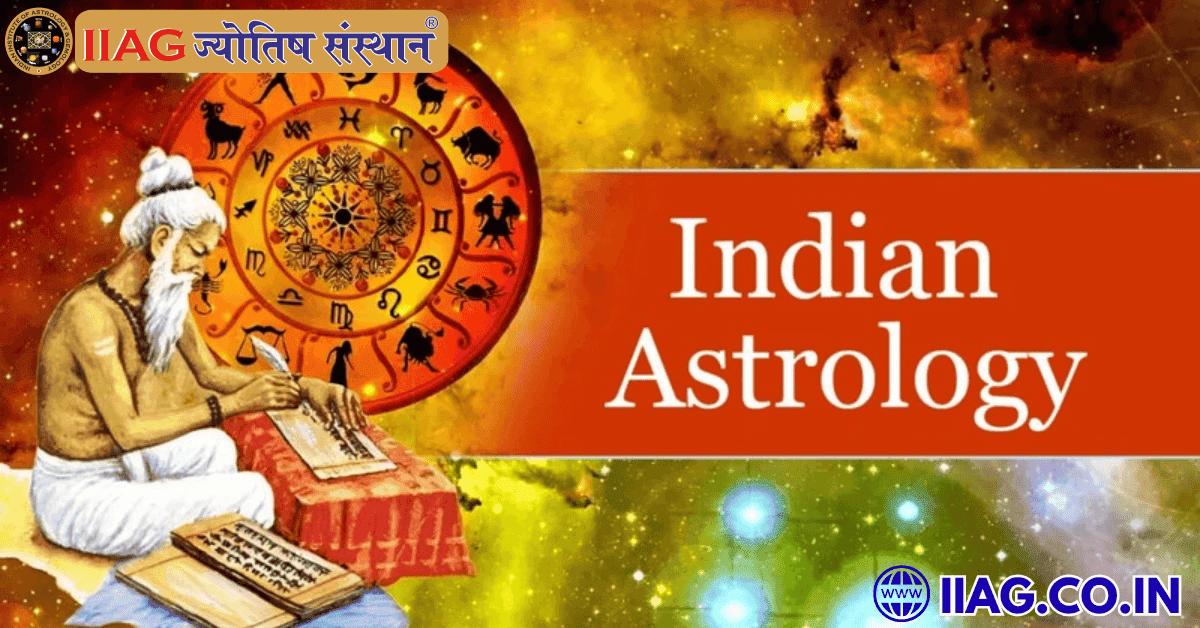
Indian astrology, also known as Bhartiya Jyotish or Jyotish Shastra, is one of the world’s oldest astrological systems. Rooted in the Vedic tradition, it combines astronomy, mathematics, and spiritual wisdom to understand human life, destiny, and cosmic influences.
For thousands of years, Indian astrology has guided decisions related to marriage, career, health, spirituality, and major life events. Even in the modern era, it remains highly relevant for individuals seeking clarity and direction.
What is Indian Astrology?
Indian astrology is a traditional system that studies the relationship between celestial bodies and human life. It analyzes:
- Planetary movements
- Zodiac signs (Rashi)
- Houses (Bhava)
- Nakshatras
- Dashas (planetary periods)
The system focuses on karma, life patterns, and spiritual growth, making Bhartiya Jyotish both predictive and philosophical in nature.
Historical Background of Bhartiya Jyotish
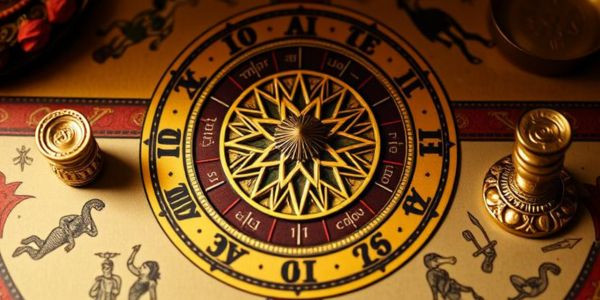
The origins of Indian astrology date back to the Vedic period (1500–500 BCE). Ancient sages (Rishis) observed celestial movements and documented their influence on earthly life.
Important classical texts include:
- Brihat Parashara Hora Shastra
- Surya Siddhanta
- Rigveda and Atharvaveda references
Historically, astrology guided:
- Royal administrative decisions
- Warfare timing
- Agricultural cycles
- Religious ceremonies
This deep-rooted tradition shaped Indian cultural and spiritual practices.
Core Components of Indian Astrology
1. Twelve Zodiac Signs (Rashi Chakra)
The Rashi system consists of 12 zodiac signs:
Mesh (Aries), Vrishabha (Taurus), Mithuna (Gemini), Karka (Cancer), Simha (Leo), Kanya (Virgo), Tula (Libra), Vrishchika (Scorpio), Dhanu (Sagittarius), Makara (Capricorn), Kumbha (Aquarius), and Meena (Pisces).
Each sign reflects personality traits and life tendencies.
2. Navagrahas (Nine Planets)
Indian astrology recognizes nine planets:
- Surya (Sun)
- Chandra (Moon)
- Mangal (Mars)
- Budh (Mercury)
- Guru (Jupiter)
- Shukra (Venus)
- Shani (Saturn)
- Rahu
- Ketu
Each planet governs specific life areas such as career, relationships, health, wealth, and spirituality.
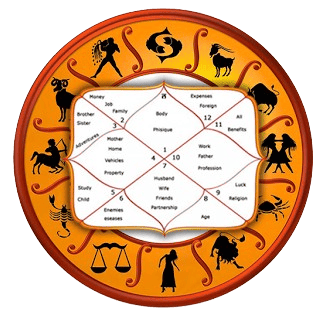
3. Twelve Houses (Bhavas)
Each horoscope contains 12 houses representing different life areas:
- 1st House – Personality and self
- 7th House – Marriage and partnerships
- 10th House – Career and public status
The placement of planets in these houses shapes life outcomes.
4. Nakshatras (27 Lunar Constellations)
The 27 Nakshatras play a crucial role in Bhartiya Jyotish. They provide deeper psychological and karmic insights beyond zodiac signs, making predictions more precise.
5. Dasha System (Planetary Periods)
The Vimshottari Dasha system is central to Indian astrology. It explains:
- Timing of events
- Life phases
- Major turning points
Dashas help astrologers determine when certain planetary energies dominate life.
6. Panchang (Hindu Almanac)
The Panchang includes:
- Tithi (Lunar day)
- Nakshatra
- Yoga
- Karana
- Vara (Weekday)
It is used to select auspicious Muhurats for important ceremonies.
Applications of Indian Astrology
Indian astrology is not limited to prediction. It provides practical guidance in multiple life areas.
1. Marriage & Kundali Milan
Kundali matching evaluates compatibility using:
- Ashtakoot Milan
- Mangal Dosha analysis
- Planetary alignment
It helps assess harmony and long-term marital stability.
2. Career & Financial Guidance
Planetary strengths influence professional paths:
- Strong Jupiter – Teaching, law, guidance roles
- Dominant Mars – Engineering, defense, technical fields
- Strong Mercury – Communication and business
Astrology identifies suitable career directions based on planetary alignment.
3. Health Analysis
Certain planetary placements may indicate health vulnerabilities. Astrologers suggest remedies like:
- Mantras
- Gemstones
- Charity
- Lifestyle corrections
4. Spiritual Growth
Rahu and Ketu indicate karmic lessons and past-life influences. Indian astrology emphasizes spiritual awareness and self-realization.
5. Muhurat & Festivals
Astrology determines auspicious timings for:
- Marriage
- Housewarming
- Business launches
- Religious rituals
This ensures harmony between cosmic energies and life events.
Remedies in Indian Astrology
To balance planetary influences, traditional remedies include:
- Mantra chanting (Gayatri Mantra, Maha Mrityunjaya Mantra)
- Wearing gemstones (Ruby, Emerald, etc.)
- Using Yantras
- Charity and donations
- Vastu alignment
These remedies aim to reduce negative planetary effects and strengthen positive influences.
Relevance of Indian Astrology in Modern Times
Despite scientific debates, Indian astrology remains widely followed because:
- It provides psychological clarity during uncertain times.
- It is deeply connected with Indian culture and traditions.
- It offers structured life guidance through horoscope analysis.
- It promotes self-awareness and decision-making confidence.
Many learners today join an Indian astrology institute to formally study Bhartiya Jyotish and understand its classical foundations.
Scientific Debate and Criticism

While Indian astrology is respected by millions, critics question its scientific validation. Supporters argue that Jyotish operates through karmic and subtle energy laws beyond material measurement.
The debate continues, but its cultural and spiritual relevance remains strong.
Conclusion
Indian astrology or Bhartiya Jyotish is a timeless system connecting cosmic patterns with human destiny. From career guidance to marriage compatibility and spiritual growth, it provides structured life insight.
For those interested in deeper study, joining a recognized Indian astrology institute can help build systematic knowledge of Jyotish Shastra.
Indian astrology continues to serve as a bridge between ancient wisdom and modern life challenges.

 0.00
0.00


 Vedic Astrology
 KP Astrology
 Advance KP
 Vastu Shastra
 Astro-Vastu
 Energy Healing
 Astro Advice
 Vastu Guidance
 NG Software
 NJ Patrika
 Gemstone Selection
 Rudraksh Selection
 Vedic Astrology
 KP Astrology
 Advance KP
 Vastu Shastra
 Astro-Vastu
 Energy Healing
 Astro Advice
 Vastu Guidance
 NG Software
 NJ Patrika
 Gemstone Selection
 Rudraksh Selection
