
 0.00
0.00


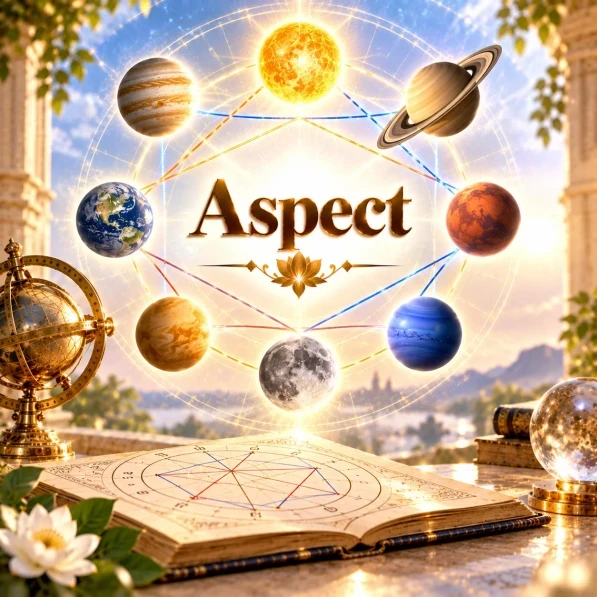
These planetary angles show:
- Supportive and smooth interactions
- Challenging growth-oriented dynamics
- Combined intensified energies
- Karmic or transformative influences
In a planetary aspects chart, these angles are clearly marked to help astrologers interpret both natal charts and current planetary aspects influencing present-day events.
Aspects are fundamental in:
- Natal chart analysis
- Predictive astrology
- Transit readings
- Synastry (relationship compatibility)
Types of Aspects in Astrology
Astrology divides aspects into Major Aspects and Minor Aspects.
1. Major Aspects of All Planets in Astrology
Major aspects form the foundation of interpretation.
Conjunction (0°)
When two planets occupy the same degree, their energies merge powerfully. This creates a dominant life theme.
Example: Sun Mercury conjunction strengthens intelligence and communication skills.
Sextile (60°)
A harmonious and opportunity-oriented aspect. It encourages creativity, cooperation, and new possibilities.
Example: Moon–Venus sextile indicates emotional balance and artistic talent.
Square (90°)
Represents tension and internal conflict. Though challenging, squares build resilience and growth.
Example: Mars–Saturn square reflects struggle with discipline but develops endurance.
Trine (120°)
A naturally flowing and beneficial aspect. It brings ease, talent, and positive life momentum.
Example: Jupiter–Sun trine suggests optimism, confidence, and fortunate circumstances.
Opposition (180°)
Planets directly opposite create polarity. This aspect requires balance and compromise.
Example: Moon–Saturn opposition may indicate emotional challenges that lead to maturity and wisdom.
- Minor Aspects
Minor aspects refine chart interpretation and provide deeper psychological insights.
Quincunx (150°)
Indicates adjustment and adaptation between mismatched energies.
Semisextile (30°)
Suggests subtle growth opportunities and minor adjustments.
Sesquiquadrate (135°)
Represents hidden stress that gradually surfaces.
Quintile (72°)
Associated with creativity, innovation, and unique talents.
How to Interpret a Planetary Aspects Chart
Interpreting aspects involves more than angles. It requires understanding:
1. Planets Involved
Each planet carries a specific energy:
- Sun – Identity and life force
- Moon – Emotions and intuition
- Mars – Action and drive
- Venus – Love and beauty
For example, Venus trine Jupiter enhances harmony in relationships and artistic success.
2. Signs and Houses
The zodiac sign and house placement modify how aspects operate.
Example: Moon in Aries square Saturn in Capricorn may create tension between emotional impulse and discipline.
3. Orb of Influence
Orb refers to how close planets are to exact degrees.
- Major aspects: 6–10° orb
- Minor aspects: 1–2° orb
Closer degrees create stronger planetary influence.
Harmonious vs Challenging Planetary Aspects
Astrology does not label aspects as good or bad. Each serves a purpose.
Harmonious Aspects
Trines and sextiles create ease, natural talent, and life opportunities. However, they may lead to complacency if not actively used.
Challenging Aspects
Squares and oppositions create friction but stimulate growth, discipline, and transformation.
Both are essential in shaping personality development.
Special Aspect Patterns
When multiple aspects combine, they create powerful geometric formations.
T-Square
Two opposing planets squared by a third create dynamic tension and growth pressure.
Grand Trine
Three planets forming a triangle of trines. Indicates natural gifts and balance but may reduce motivation without challenge.
Yod (Finger of God)
Two planets sextile each other and both quincunx a third planet. Represents a special life purpose requiring adjustment.
Stellium
Multiple planets grouped in one sign or house create concentrated energy and dominant life themes.
Practical Use of Planetary Aspects
Understanding aspects is not theoretical it has real-life applications.
Self Awareness
Aspects reveal strengths, weaknesses, karmic lessons, and life themes.
Relationship Compatibility
Synastry compares planetary aspects between partners to identify harmony and conflict.
Timing Events
Astrologers study current planetary aspects and planetary aspects today to understand transits affecting career, relationships, and personal growth.
Career Direction
Certain aspects indicate professional aptitude. Mercury trine Uranus favors technology and innovation.
Conclusion
The aspect of planets forms the structural framework of astrology. Whether analyzing aspects of all planets in astrology, studying aspect of planets in Vedic astrology, or reviewing planetary aspects chart patterns, aspects unify planetary energies into one meaningful life story.
Every planetary aspect harmonious or challenging guides you toward self-realization and growth.
By understanding planetary angles, you gain clarity about your personality, relationships, destiny path, and even the influence of planetary aspects today on your life journey.
Astrology becomes powerful when aspects are understood deeply because they reveal how the cosmos communicates through your chart.





 Vedic Astrology
 KP Astrology
 Advance KP
 Vastu Shastra
 Astro-Vastu
 Energy Healing
 Astro Advice
 Vastu Guidance
 NG Software
 NJ Patrika
 Gemstone Selection
 Rudraksh Selection
 Vedic Astrology
 KP Astrology
 Advance KP
 Vastu Shastra
 Astro-Vastu
 Energy Healing
 Astro Advice
 Vastu Guidance
 NG Software
 NJ Patrika
 Gemstone Selection
 Rudraksh Selection
