Most people who consult an astrologer walk away with answers that feel frustratingly open-ended. “Something significant may happen in the next two years” is hardly the kind of clarity anyone is looking for when facing a major life decision.
This gap between vague forecasting and genuine predictive accuracy is exactly what led Prof. K.S. Krishnamurti spent decades refining a system that would eventually reshape how serious astrologers approach chart analysis. That system is Krishnamurti Paddhati commonly called KP Astrology and it remains one of the most structurally rigorous predictive frameworks in use today.
The Problem KP Astrology Was Built to Solve
Traditional Vedic astrology carries immense wisdom, but it also carries a persistent problem: two experienced practitioners can study the same birth chart and arrive at contradictory conclusions. Both might be technically correct within their interpretive frameworks, yet neither delivers a definitive answer.
Prof. Krishnamurti recognized this inconsistency as a structural flaw rather than a knowledge gap. His solution was not to reject classical astrology but to introduce a layer of mathematical precision that would reduce interpretive ambiguity. By anchoring predictions to specific sub-divisional markers within the chart rather than relying on broad sign placements alone he created a system where two astrologers analyzing the same data would be far more likely to reach convergent conclusions.
What Actually Makes KP Different: The Technical Foundation
Understanding KP Astrology requires familiarity with a few core concepts that distinguish it from mainstream approaches.
Nakshatra Lordship Over Sign Lordship
In classical astrology, a planet's behavior is largely determined by which zodiac sign it occupies. KP Astrology shifts the primary focus to the Nakshatra, the lunar mansion that the planet occupies. The lord of that Nakshatra, in KP's framework, often exerts greater influence over how the planet actually delivers results than the sign lord does. This single shift in analytical priority produces noticeably different (and typically more specific) readings.
The Sub-Lord: Where Precision Lives
Each of the 27 Nakshatras is further subdivided into segments governed by what KP calls Sub-Lords. These sub-divisions follow the Vimshottari Dasha sequence proportionally, creating a layered hierarchy: planet → Nakshatra lord → Sub-Lord.
The Sub-Lord of any given point in the chart, particularly the cusps of relevant houses acts as the decisive indicator for whether a specific event will materialize. Practitioners often describe the Sub-Lord as the system's most powerful analytical lever, because it moves predictions from the realm of possibility into the realm of probability.
Placidus Cusps and the KP Ayanamsa
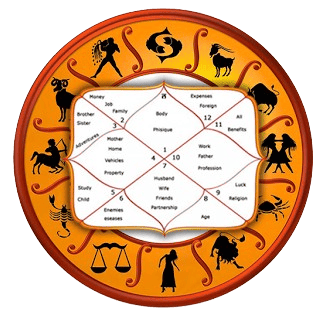
Unlike most Vedic systems that use whole sign houses, KP Astrology employs Placidus house division. This means each house has a precisely calculated cusp to a specific degree at which that house begins. Combined with the KP Ayanamsa (a slightly different calibration of the zodiac from the standard Lahiri), these two technical choices produce a chart that looks different from a conventional Vedic horoscope and yields different analytical results.
Practical Applications Across Life Domains
KP Astrology's strength lies not in philosophical interpretation but in answering concrete questions. Here is how practitioners typically apply it:
Career Timing — Rather than identifying a general “career-favorable period,” a KP analysis examines the Sub-Lord of the 10th cusp to determine whether professional advancement is genuinely supported, and cross-references it with Dasha and transit conditions to narrow down specific timeframes.
Marriage Prospects — The 7th house cusp Sub-Lord is examined to assess whether marriage is indicated at all, what its nature might be, and when combined with running planetary periods approximately when it could occur.
Financial Decisions — Questions about property acquisition, investment timing, and financial stability are addressed through analysis of the 2nd, 6th, and 11th house cusps, each governing different aspects of wealth.
Health Outcomes — Specific houses govern health challenges and recovery windows. KP practitioners use Sub-Lord analysis of these cusps alongside transit data to identify vulnerable and recuperative periods.
Horary KP: Answering Specific Questions in Real Time
One of the more distinctive applications of KP Astrology is its honorary branch, where a chart is cast for the exact moment a question is asked rather than for a birth moment. A random number between 1 and 249 (corresponding to a specific Sub-Lord) is selected by the querent, and a chart is generated from that starting point.
The concept of Ruling Planets, the lords of the current ascendant sign, Nakshatra, and their sub-divisions at the moment of query serves as a verification mechanism, helping the astrologer confirm whether the chart is responding meaningfully to the question being asked.
This real-time applicability gives KP Astrology utility even for people who do not have a verified birth time, which is a significant practical advantage.
Limitations Worth Acknowledging
No predictive system, astrological or otherwise, operates with perfect accuracy. KP Astrology's precision depends heavily on the quality of the birth data; an approximate birth time introduces real error into cuspal calculations, which undermines the Sub-Lord analysis that the whole system rests on.
Additionally, the system's emphasis on technical calculation over intuitive interpretation means that practitioners need genuine fluency with its mechanics to use it well. A surface-level familiarity with KP concepts without deep practice tends to produce results indistinguishable from less rigorous methods.
What KP does offer meaningfully and consistently is a replicable framework where conclusions can be tested, documented, and evaluated against actual outcomes. That testability is what has sustained its reputation across several decades of practice.
Why Astrologers Continue to Choose This System
The growing community of KP practitioners across India and internationally reflects a simple reality: when predictions can be articulated specifically enough to be verified, a system either builds credibility or loses it relatively quickly.
KP Astrology has built it not through claims of infallibility, but through a methodology rigorous enough to generate specific, timed predictions that practitioners can track and refine over years of practice.
For anyone serious about astrology as a predictive discipline rather than a philosophical one, KP Astrology represents one of the most intellectually coherent frameworks available.




 Astro Advice
 NG Software
 NJ Patrika
 Vedic Astrology
 KP Astrology
 Advance KP
 Vastu Shastra
 Astro-Vastu
 Energy Healing
 Astro Advice
 Vastu Guidance
 NG Software
 NJ Patrika
 Gemstone Selection
 Rudraksh Selection