The hospitality industry thrives on guest satisfaction, positive experiences, and consistent revenue flow. While architecture, interior design, and service quality play vital roles, the energy of the space itself also influences success. This is where Vastu for hotels becomes important.
Rooted in ancient Indian architectural science, Vastu Shastra focuses on balancing natural energies within a structure. When applied correctly, vastu for hotel planning enhances guest comfort, improves operational efficiency, and supports financial prosperity.
Whether you are constructing a new property or upgrading an existing one, aligning your hotel with Vastu principles can create a harmonious and profitable environment.
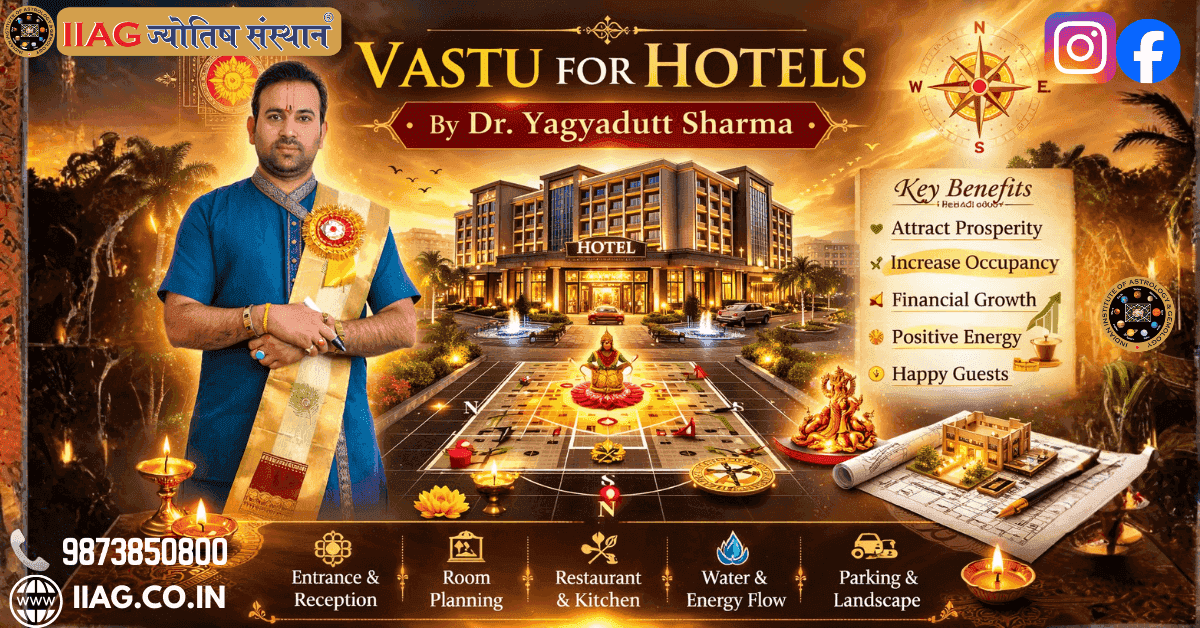
Why Vastu Matters for Hotels

Hotels are dynamic spaces where guests sleep, dine, relax, attend events, and conduct business. Proper energy alignment ensures smooth operations and positive experiences.
Implementing vastu for hotels offers:
- Enhanced guest comfort and satisfaction
- Increased occupancy rates
- Better staff efficiency
- Reduced conflicts and operational issues
- Stronger financial stability
A Vastu-aligned hotel feels welcoming, peaceful, and naturally attractive to guests.
Vastu Guidelines for Hotel Design
1. Location & Orientation
The foundation of successful vastu for hotel planning begins with proper site selection.
- Plot shape should ideally be square or rectangular
- Main entrance should face North, East, or Northeast
- Avoid proximity to graveyards, heavy industrial zones, or hospitals
Balanced land orientation supports smooth energy circulation.
2. Reception Area
The reception is the first interaction point for guests.
- Ideal placement: Northeast
- Reception desk should face North or East
- A small water fountain or aquarium in the Northeast enhances prosperity
A well-positioned reception improves first impressions and energy flow.
3. Guest Rooms
Guest comfort is central to hospitality success.
- Rooms should ideally be in Southwest, Northwest, or Southeast zones
- Avoid placing guest rooms in Northeast
- Bed headboards should face South or East
- Mirrors should not directly face the bed
- Use soft, natural lighting
Proper room alignment ensures restful sleep and positive experiences.
4. Dining Area & Kitchen
Food areas influence health and satisfaction.
- Kitchen should be located in Southeast (Fire element zone)
- Dining area should face East or North
- Avoid placing the kitchen near the main entrance
Correct placement improves hygiene, service efficiency, and guest satisfaction.
5. Lobby & Waiting Areas
The lobby reflects your brand identity.
- Preferably located in Northeast
- Keep the space open, well-lit, and clutter-free
- Use indoor plants to enhance positivity
- Choose light colors like beige, cream, or pastel shades
A spacious and bright lobby creates a welcoming atmosphere.
6. Banquet Halls & Conference Rooms
These areas should support communication and activity.
- Ideal location: West or South
- Seating arrangements facing East encourage alertness
- Ensure proper ventilation and lighting
Balanced design improves event success and client satisfaction.
7. Swimming Pool & Water Features
Water represents prosperity.
- Pools and fountains should be in North, Northeast, or East
- Avoid water features in South or Southwest
Proper water placement enhances financial growth and stability.
8. Staircases & Elevators
Vertical movement influences internal energy circulation.
- Staircases should be in South or West
- Avoid placing staircases in Northeast
- Elevators are suitable in Northwest or Southeast
- Avoid positioning elevators directly in front of the main entrance
Correct placement ensures structural balance.
9. Staff Quarters & Utility Areas
Operational areas must also follow Vastu principles.
- Staff rooms and utilities should be in South or Southeast
- Maintain cleanliness and ventilation
Balanced utility zones support employee productivity.
Interior Design Tips According to Vastu

1. Colors
- Northeast: Yellow or green (prosperity)
- Southeast: Red or orange (energy)
- North: Blue (calmness and water element)
Proper color selection enhances mood and energy.
2. Décor
- Avoid sharp-edged furniture
- Use natural materials like wood and stone
- Select artwork depicting nature or positivity
3. Lighting
- Maximize natural light, especially in Northeast
- Use soft mood lighting for evening ambiance
These elements strengthen the overall effect of vastu for hotels.
Common Vastu Dos & Don’ts for Hotels
Dos:
- Keep all areas clean and clutter-free
- Use Vastu pyramids or yantras for minor defects
- Maintain proportional room layouts
Don’ts:
- Avoid heavy objects in Northeast
- Avoid dark or dull public spaces
- Do not use irregular architectural shapes
Vastu Remedies for Existing Hotels
If structural changes are not possible, remedies can help:
- Place salt water bowls in corners to absorb negativity
- Install Vastu-compliant wind chimes
- Use crystals or gemstones in key areas
- Add plants in North and East zones
These adjustments help balance energy without major renovation.
Conclusion
Vastu Shastra plays a significant role in shaping the success of hospitality businesses. A hotel designed according to vastu for hotel principles enhances guest experiences, improves staff performance, and strengthens financial growth.
Incorporating vastu for hotels into architectural planning and interior design ensures harmony, prosperity, and long-term sustainability.
If you are launching a new property or refining an existing one, applying Vastu principles can help your hotel grow in reputation, revenue, and overall success.

 0.00
0.00



 Vedic Astrology
 KP Astrology
 Advance KP
 Vastu Shastra
 Astro-Vastu
 Energy Healing
 Astro Advice
 Vastu Guidance
 NG Software
 NJ Patrika
 Gemstone Selection
 Rudraksh Selection
 Vedic Astrology
 KP Astrology
 Advance KP
 Vastu Shastra
 Astro-Vastu
 Energy Healing
 Astro Advice
 Vastu Guidance
 NG Software
 NJ Patrika
 Gemstone Selection
 Rudraksh Selection
