
 0.00
0.00
 0
0

3960 Views | November 08, 2024
In modern times, before marriage, everyone wants clarity about their future partner’s behavior, compatibility, and married life. Questions like “Will our relationship be harmonious?”, “Is there any dosha in the horoscope?”, and “Are we astrologically compatible?” are common.
This is where kundli match making becomes important.
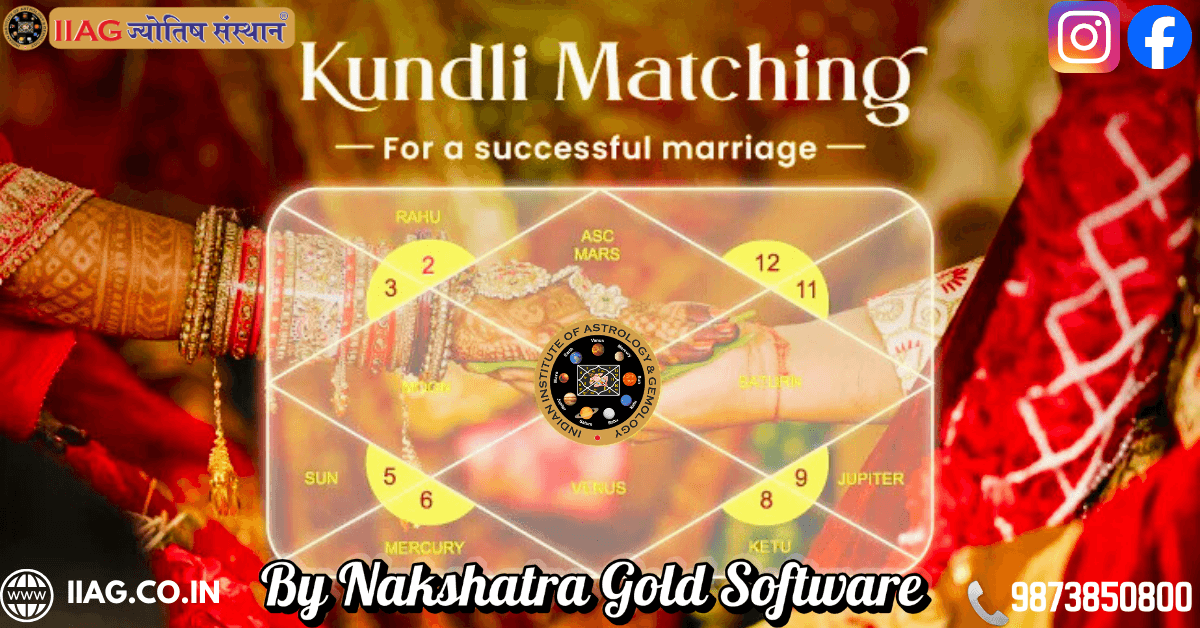
Kundli match making, also known as kundali milan or marriage matching, is a traditional Vedic astrology method used to analyze compatibility between two individuals before marriage. It helps families and couples understand emotional, physical, mental, and spiritual compatibility.
Kundli match making is the process of comparing two birth charts (horoscopes) to evaluate compatibility for marriage. In Vedic astrology, this process is also called Ashtakoot matching.
The purpose of match making is to:
Through proper marriage matching, couples can get clarity and confidence before entering married life.
Another name for kundli match making is Ashtakoot matching. In this system, eight different aspects (kootas) are matched between the bride and groom. These eight parameters help measure compatibility on multiple levels.
The eight aspects checked in kundali milan include:
In traditional kundali milan, a total of 36 gunas are matched. Higher scores indicate better compatibility for marriage matching.
Today’s generation wants assurance before commitment. Kundli match making helps answer important questions such as:
By performing proper match making, you can identify whether the person is Manglik or not and check for any horoscope defects in advance.
This helps in avoiding misunderstandings and future marital conflicts.
One of the main reasons people opt for kundli match making is to check:
Through accurate kundali milan, it becomes easy to know whether both horoscopes are compatible or if remedies are required before marriage.
This makes marriage matching not just a ritual, but a practical step toward a balanced and harmonious married life.
With the help of a Guna Matching Tool Software, you can:
The software simplifies traditional Ashtakoot kundli match making into an easy and accurate process.
Kundli match making is an essential step in traditional Vedic marriage matching. Also known as kundali milan, it helps evaluate compatibility by matching eight important aspects of both horoscopes.
By using proper match making methods or Guna Matching Tool Software, you can understand:
Before starting a new chapter of life, marriage matching gives clarity, confidence, and guidance for a happy married life.
 Vedic Astrology
 KP Astrology
 Advance KP
 Vastu Shastra
 Astro-Vastu
 Energy Healing
 Astro Advice
 Vastu Guidance
 NG Software
 NJ Patrika
 Gemstone Selection
 Rudraksh Selection
 Vedic Astrology
 KP Astrology
 Advance KP
 Vastu Shastra
 Astro-Vastu
 Energy Healing
 Astro Advice
 Vastu Guidance
 NG Software
 NJ Patrika
 Gemstone Selection
 Rudraksh Selection
