 0.00
0.00
 0
0

4356 Views | December 02, 2024
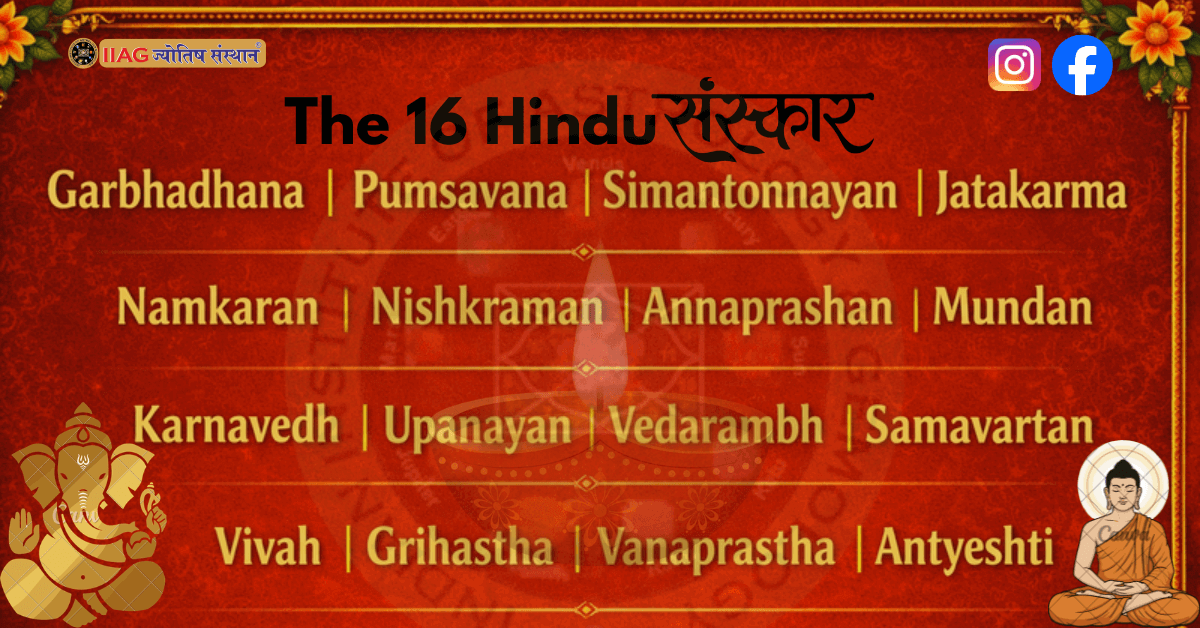
The 16 Sanskar (also known as Solah Sanskar) are sacred rites of passage in Hinduism designed to purify, refine, and elevate human life from birth to death. These rituals form the foundation of Sanatan Dharma and represent a systematic spiritual journey.
In Hindu tradition, life is considered sacred, and every important stage is sanctified through rituals called Sanskar. These rites aim to remove past karmic impurities (Dosha Marjan) and enhance virtues (Gunadhan).
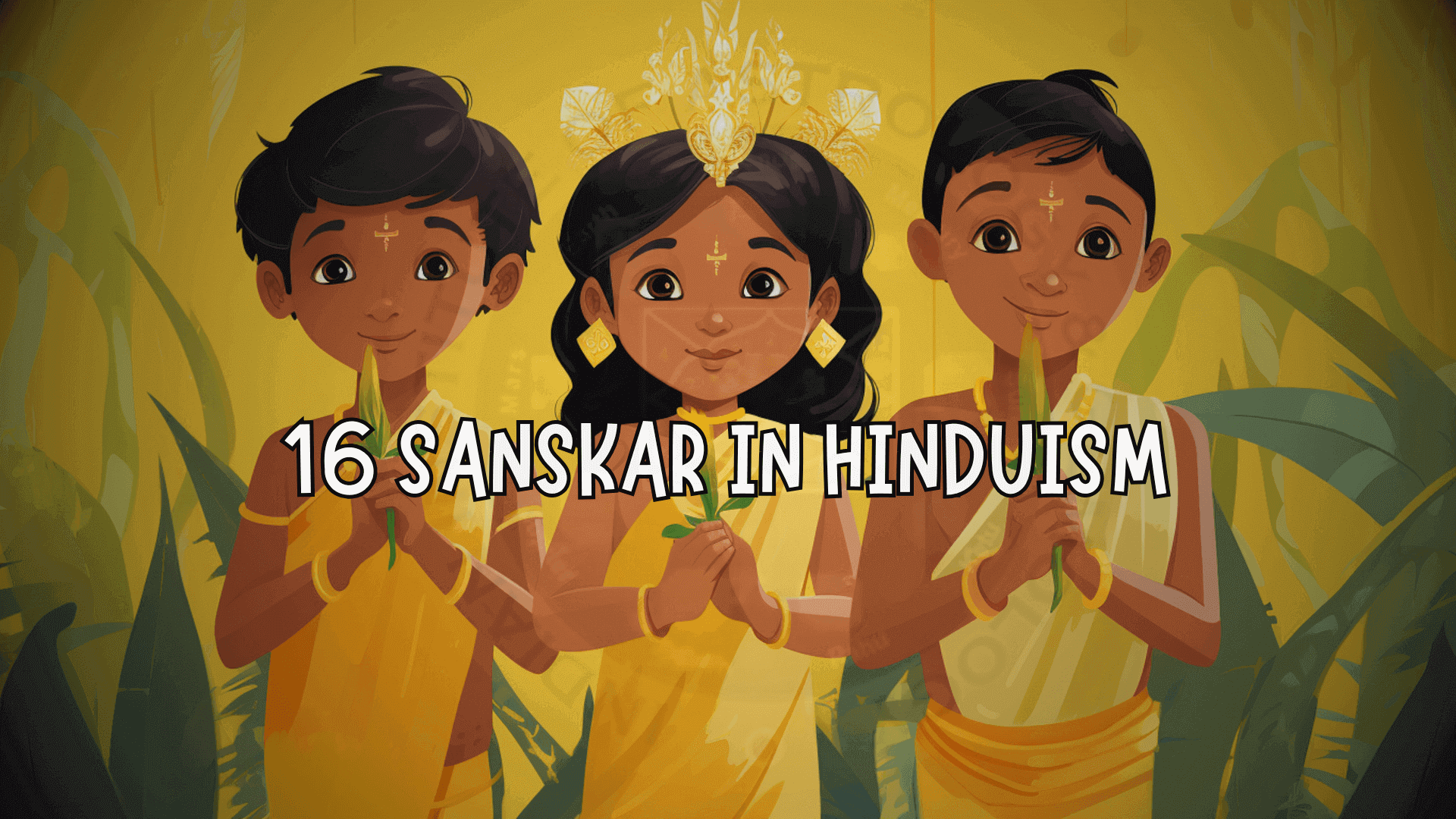
The 16 Sanskar in Hinduism are spiritual ceremonies performed at key stages of life — beginning before birth and ending with funeral rites.
These rituals are mentioned in various scriptures like Gautam Smriti, Vyas Smriti, and Dharmashastras.
The sixteen primary Sanskar include:
These rituals shape an individual’s physical, mental, social, and spiritual growth.
The first of the Hindu 16 Sanskar, performed before conception.
Purpose: Purity of mind and body for healthy progeny.
Performed in the 2nd or 3rd month of pregnancy.
Purpose: Healthy mental and physical development of the fetus.
Performed in the 6th or 8th month of pregnancy.
Purpose: Protection of mother and unborn child.
Performed immediately after birth.
Purpose: Blessings for intelligence, strength, and longevity.
Performed on the 11th day after birth.
Purpose: Assigning identity and shaping destiny through name vibrations.
Performed in the 4th month.
Purpose: Introducing the child to sunlight, moonlight, and the external world.
Performed in the 6th month.
Purpose: First intake of solid food for physical and mental strength.
Hair shaving ceremony, usually in 1st, 3rd, or 5th year.
Purpose: Removal of impurities and intellectual development.
Beginning of formal education.
Purpose: Introduction to letters and knowledge.
Scientific and health-based ritual.
Purpose: Protection from ailments and symbolic refinement.
Highly significant rite in 16 Sanskar in Hinduism.
Purpose: Initiation into spiritual discipline and Gayatri mantra.
Symbolizes entry into disciplined life and Vedic learning.
Beginning of Vedic studies.
Purpose: Formal education under guidance of Guru.
Ceremony performed after completion of studies.
Purpose: Preparation for transition to householder life.
Graduation ceremony from Gurukul.
Purpose: Completion of Brahmacharya stage.
One of the most important Sanskar.
Purpose: Entry into Grihastha Ashram (householder life).
Eight traditional types of marriage are described in scriptures.
Final rite of passage.
Purpose: Peaceful transition of the soul to next journey.
This concludes the spiritual cycle of life.
The 16 Sanskar are also grouped as:
Remaining ceremonies after birth.
These rituals aim at:
The Hindu Dharm ke 16 Sanskar serve multiple purposes:
They ensure balanced development physical, mental, and spiritual.
Although modern lifestyles have reduced ritual practice, their core principles remain relevant:
These rites reflect the depth and uniqueness of Indian civilization.
हिंदू धर्म के 16 संस्कार (Solah Sanskar) जन्म से लेकर मृत्यु तक जीवन के महत्वपूर्ण पड़ावों पर किए जाने वाले पवित्र संस्कार हैं। ये संस्कार व्यक्ति के शारीरिक, मानसिक और आध्यात्मिक विकास के लिए आवश्यक माने जाते हैं।
The 16 Sanskar in Hinduism represent a complete life cycle designed to purify, refine, and elevate human existence. These rites are not merely religious rituals but structured systems for building character, discipline, and spiritual awareness.
The Solah Sanskar form the backbone of Sanatan culture, preserving values that have guided generations.
Understanding these rituals helps connect modern life with ancient wisdom.
 Bhartiya Jyotish
 KP Astrology
 Advance KP
 Vastu Shastra
 Astro-Vastu
 Energy Healing
 Sample Course
 Astro Advice
 Vastu Guidance
 NG Software
 NJ Patrika
 Gemstone Selection
 Rudraksh Selection
 Bhartiya Jyotish
 KP Astrology
 Advance KP
 Vastu Shastra
 Astro-Vastu
 Energy Healing
 Sample Course
 Astro Advice
 Vastu Guidance
 NG Software
 NJ Patrika
 Gemstone Selection
 Rudraksh Selection
